
 Two engines, explained
Multi-EngineTheory
Flying an aeroplane with two engines is not simply twice the single-engine flying you already know. When one engine stops, the aeroplane yaws, rolls and loses most of its climb, and what happens next depends on what you know and how quickly you act.
- animated slides
- 237
- animated slides
- chapters
- 13
- chapters
- questions, all explained
- 256
- questions, all explained
Free preview
Losing the left engine
The left engine fails and is feathered. With the nose high, asymmetric blade effect has moved the right engine's thrust line out to the right, so its thrust works on the long arm and the twin yaws hard towards the dead engine. Then the same with the right engine failed: a shorter arm and a smaller yaw, which is why the left engine is the critical one. This slide is from chapter 6, Asymmetric Blade Effect, recorded as it plays in the course. Turn your sound on to hear the narration.
Multi-Engine Theory· Chapter 6 · Asymmetric Blade Effect0:41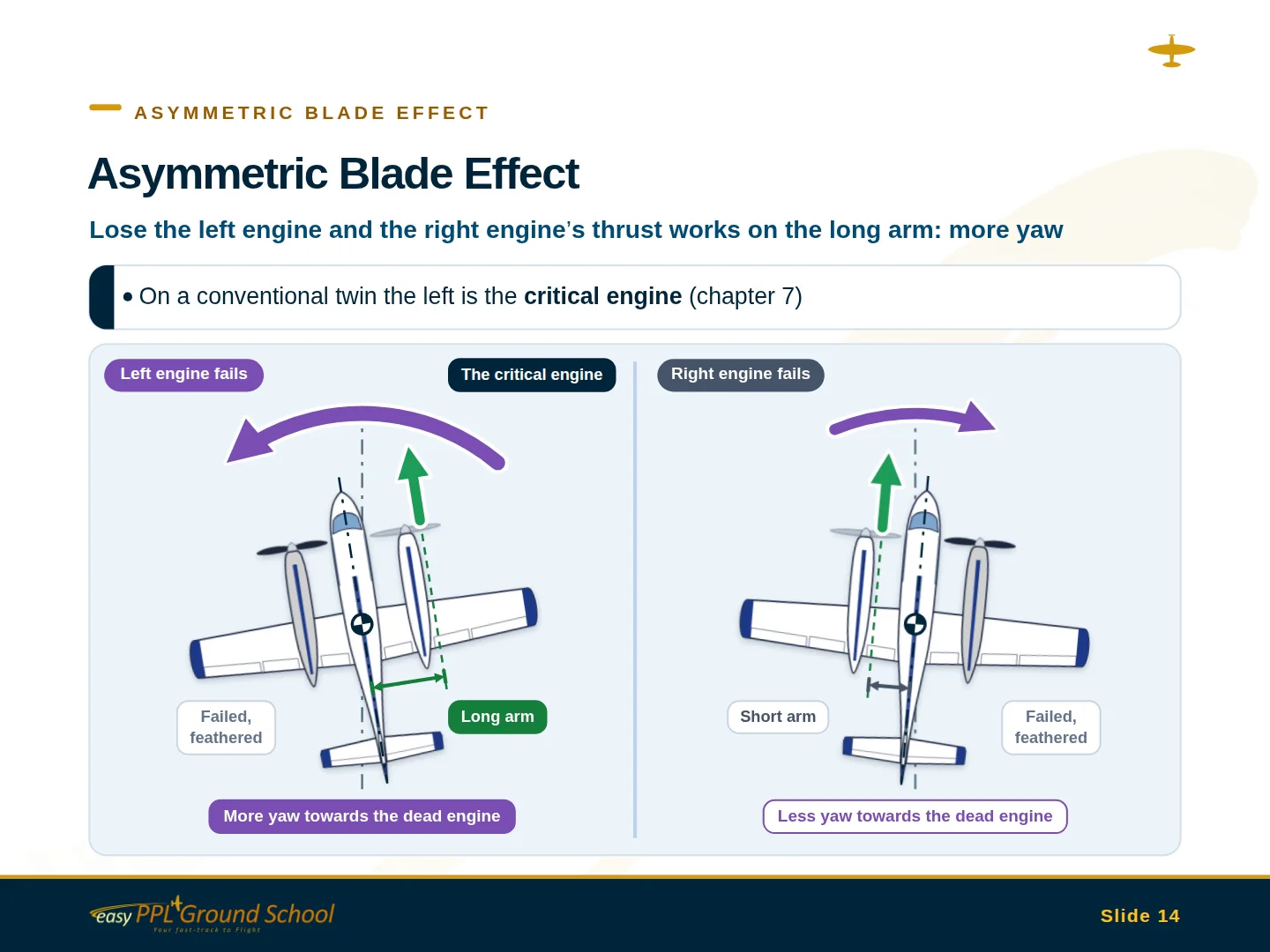
- Every slide is animatedEach step builds up as it's explained, at a pace you can follow.
- Three narratorsThree voices take turns to teach the animated slides, in depth.
- Classic slides tooSwitch to Classic to see any slide as a still picture, with its own narration.
The course
What you'll learn
This course teaches the theory of multi-engine piston aeroplanes from the beginning, in detail and in plain English: the aeroplane and its systems, engines and feathering propellers, asymmetric forces, asymmetric blade effect and the critical engine, minimum control speed, performance on one engine, planning and the take-off, the engine failure drills, the asymmetric approach, landing and go-around, safe training and the multi-engine piston class rating.
It is written for student pilots and PPL holders who want to understand twins before they fly one, or instead of buying a book. Every chapter ends with a progress test, and the course ends with a course exam.
To prove you have completed the course, after you have passed our on-line exam you will be issued with a Course Completion Certificate.
What you'll understand
Why a twin behaves as it does
With an engine failed, a twin yaws, rolls and loses most of its climb. The course takes each reason in turn, with moving diagrams like these.
Chapter 6
Asymmetric blade effect
Nose high, in the climb or slow flight, the down-going blade meets the air faster and at a bigger angle of attack than the up-going one. It gives more thrust, so the centre of thrust moves to the down-going side: on a propeller turning clockwise seen from behind, to the right.
Chapter 7
The critical engine
On a conventional twin both thrust lines move right when the nose is high, so the right engine's arm is the longer. Lose the left engine and the live engine's thrust works on that long arm, with more yaw. That is one of the four reasons the left engine is the critical one.
Chapter 8
Minimum control speed
The live engine's yaw doesn't get smaller as you slow down, but the rudder's force falls with the square of the speed. Below VMC, the red line, full rudder isn't enough. After a failure you fly VYSE, the blue line.
Chapter 3
Feathering
A propeller windmilling in fine pitch can make as much drag as the whole airframe, and it acts on the failed engine's side. Feathering turns the blades edge-on to the airflow: the propeller stops and its drag becomes small.
The honest picture
Two engines are not twice as safe
Losing one engine takes half the power but most of the climb, because most of the live engine's power goes on overcoming the drag. Some light twins, on some days, can't climb on one engine at all. The second engine is an advantage only to a pilot who is trained and current, and flies the drill correctly.
- Power
- 400 thp
- Spare to climb
- 225 thp
- Power
- 200 thp
- Spare to climb
- 25 thp
A published example from chapter 9: two engines of 200 thrust horsepower each, with 175 needed to fly level.
- 80–90%Of the climb typically gone with one engine failed, for half the power
- 2×About twice the chance that an engine fails, with two engines instead of one
- 2 to 5°Of bank towards the live engine for zero sideslip, the ball a third to a half out
- ¼Of the rudder's force at half the speed: the reason for a minimum control speed
Course contents
Four parts, 13 chapters
From the aeroplane itself to the rating, every idea taught from the start for pilots who know single-engine flying at PPL level. It isn't about one type: your flight manual gives your type's figures. Every chapter ends with its common traps, a recap and a progress test.
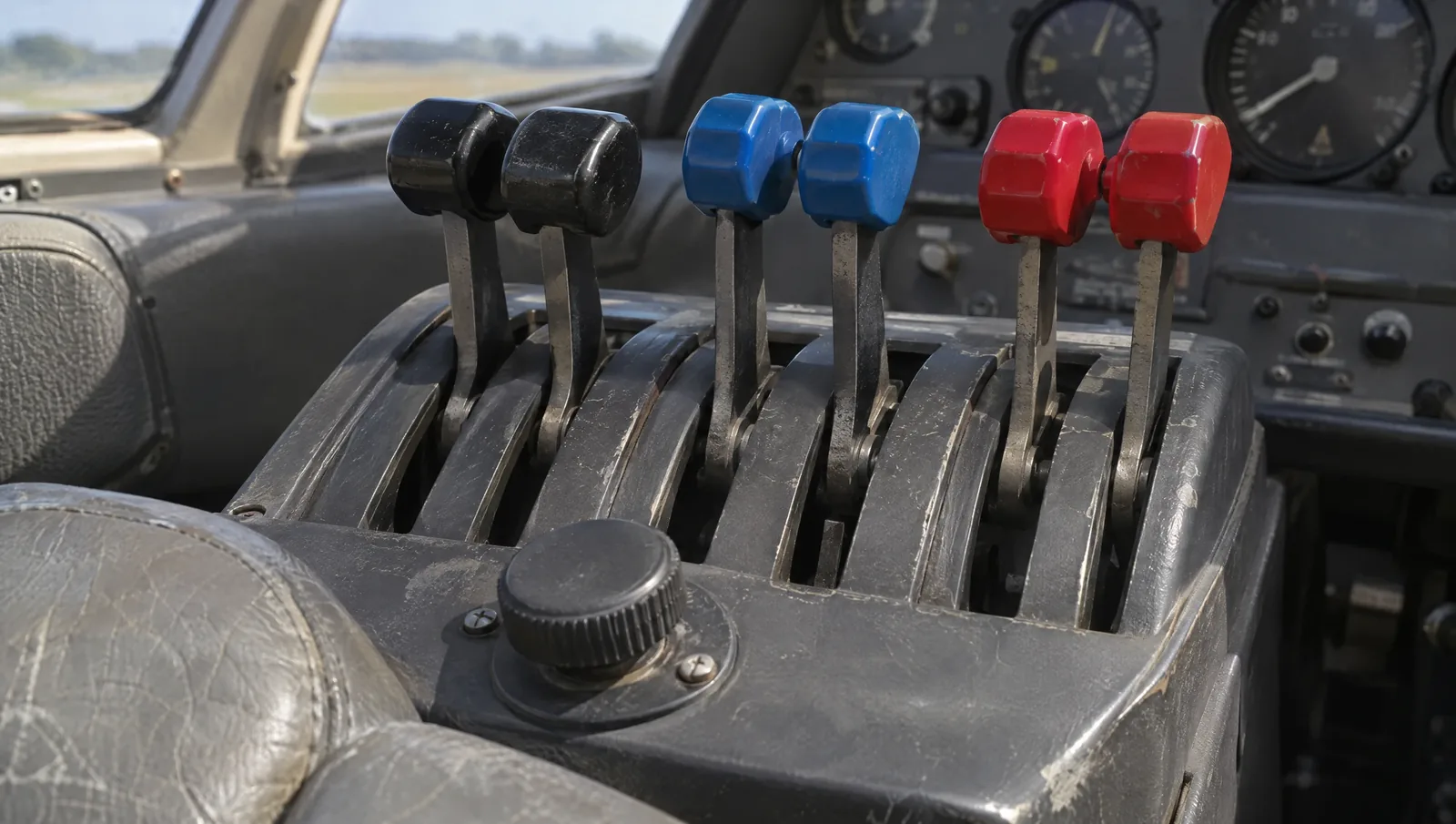
The six levers 01Part 1
The aeroplane
What a light twin is, its levers and instruments, its engines and feathering propellers, and its systems.
- 1IntroductionWhat a multi-engine aeroplane is, why fly one, why two engines are not twice as safe, the aeroplanes in this course, the MEP class rating at a glance, and the words and speeds you will meet.17 slides Progress Test 1
- 2The Multi-Engine AeroplaneLayouts, the parts of a light twin, the six levers and which is which, engine instruments in pairs, the red and blue radial lines, the speeds you must know, and how light twins are certified for one-engine climb.16 slides Progress Test 2
- 3Engines and PropellersThe engines on light twins, what feathering does and why it matters, how a feathering propeller works, the anti-feather lock, unfeathering for a restart, counter-rotating propellers, and handling the levers.18 slides Progress Test 3
- 4Fuel, Electrical and Other SystemsThe fuel system and crossfeed, fuel with an engine out, the electrical system and losing an alternator, air for the instruments, landing gear and its emergency extension, cabin heating and ice protection.14 slides Progress Test 4
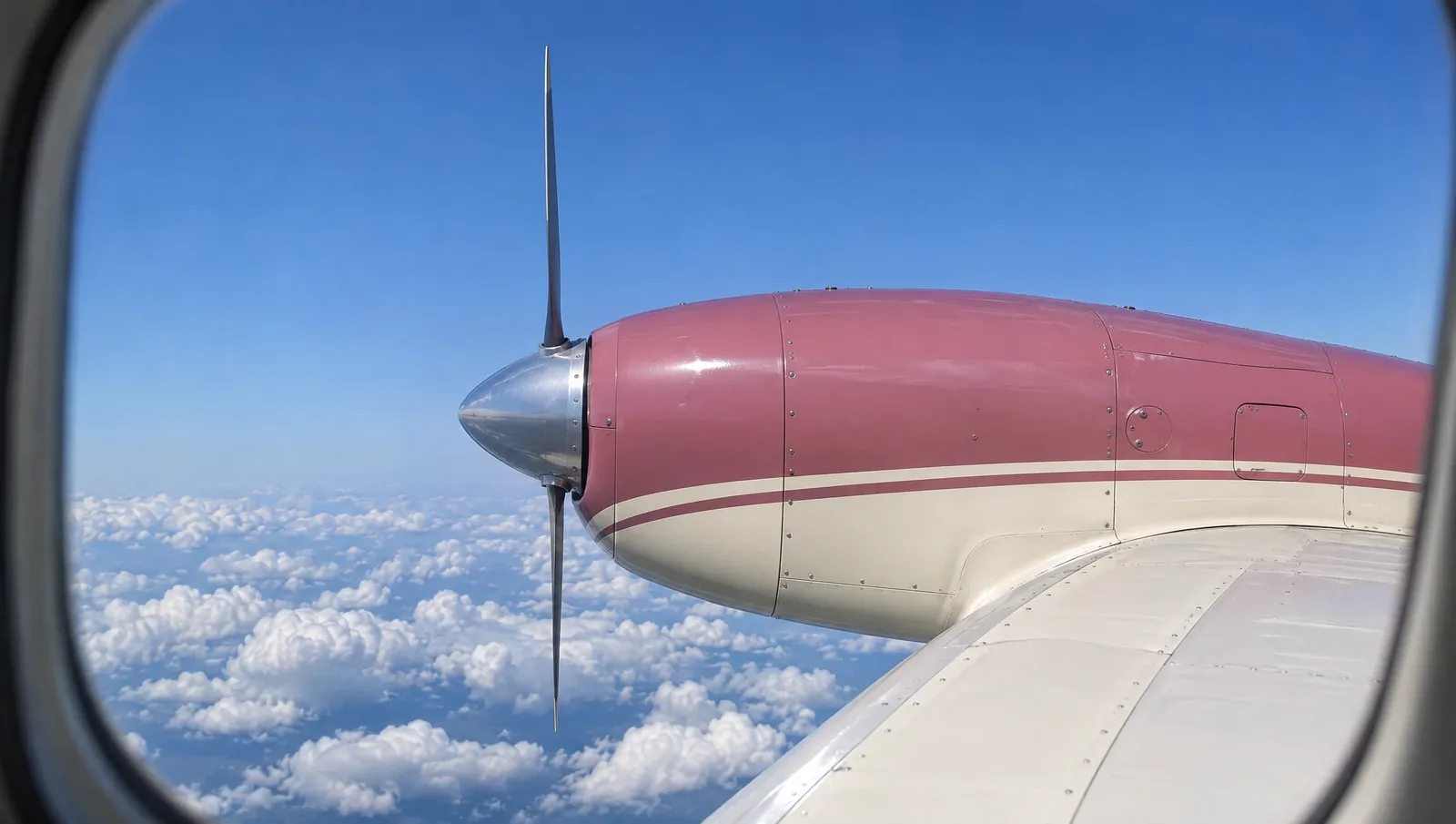
Feathered 02Part 2
When an engine fails
What happens when one engine stops, and why: the forces, asymmetric blade effect, the critical engine and the minimum control speed.
- 5Asymmetric ForcesTurning forces, the failed propeller's drag, yaw bringing roll, lost slipstream lift, sideslip and the fin, the rudder's side force and its moment, aileron, why speed matters, zero sideslip and the yaw string.21 slides Progress Test 5
- 6Asymmetric Blade EffectA blade as a rotating wing and its angle of attack, the down-going and up-going blades, the centre of thrust moving, both thrust lines moving right in a twin, the unequal arms, when it is strongest, and counter-rotating propellers.19 slides Progress Test 6
- 7The Critical EngineWhat the critical engine is and the four reasons for it: P-factor, accelerated slipstream, spiralling slipstream and torque. Then all four together, counter-rotating propellers, centreline thrust, and what it means for you.15 slides Progress Test 7
- 8Minimum Control Speed (VMC)What VMC is and why there is a minimum speed, how it is found, what raises and lowers it, VMC and the stall, the signs of losing directional control and the recovery, why the red line is not a promise, and demonstrations in training.21 slides Progress Test 8
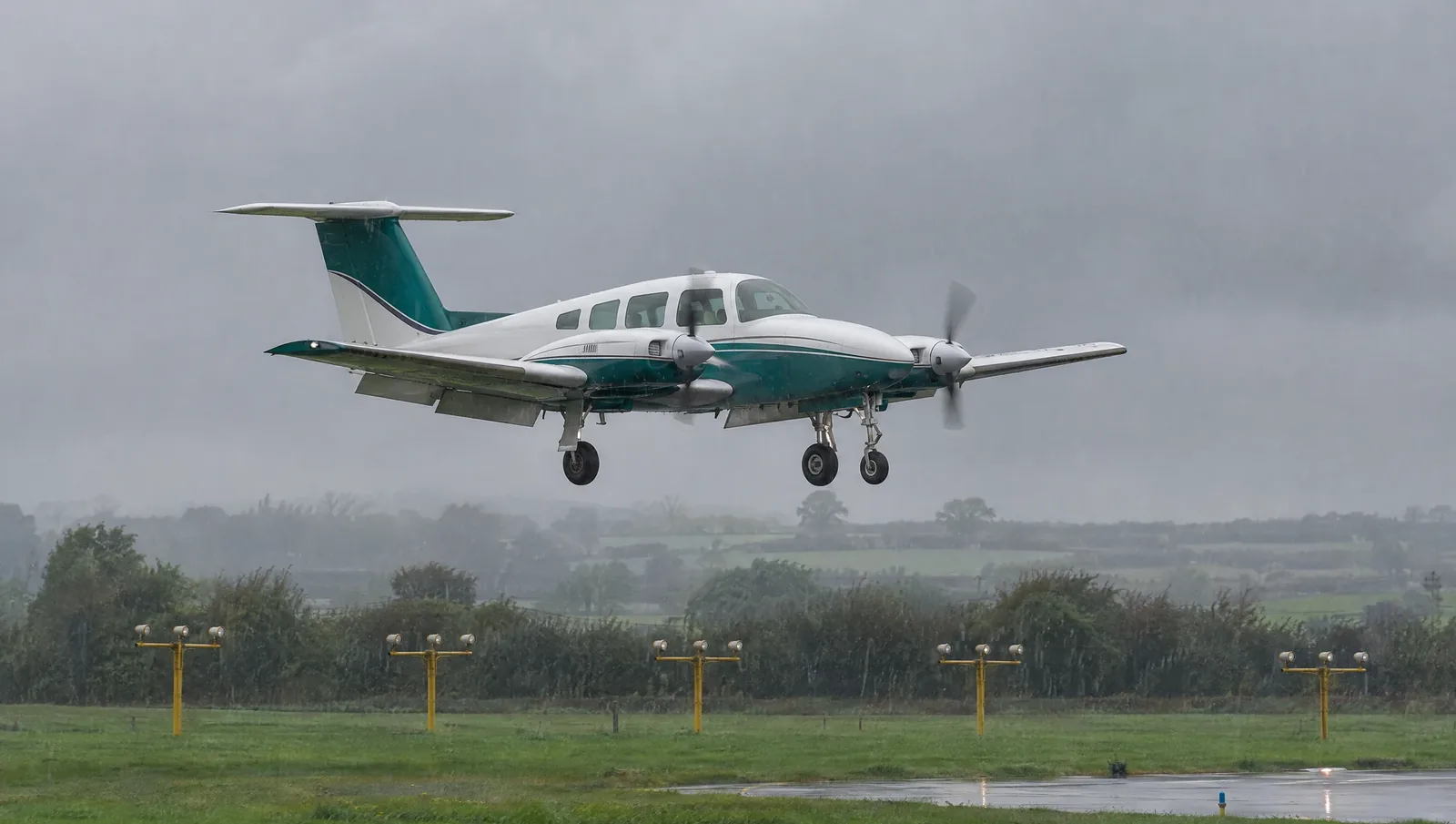
On final in the rain 03Part 3
Flying it on one engine
Performance on one engine, planning the take-off, the engine failure drills, and the approach, landing and go-around.
- 9One-Engine-Inoperative PerformanceWhy climb comes from excess power, half the power and most of the climb gone, VYSE and VXSE, what drag costs, zero sideslip, weight and density altitude, turbocharged engines, the ceilings and drift-down, and reading the one-engine climb chart.17 slides Progress Test 9
- 10Planning and Take-offWeight and balance, the take-off speeds, accelerate-stop and accelerate-go distances, when a go is possible, choosing the runway and the climb-out, the decision point, the danger window and the take-off briefing.16 slides Progress Test 10
- 11Engine Failure ProceduresThe priorities and the drill: control first, power up, drag clean, identify, confirm, feather and secure. Then a failure on the take-off run, after take-off and in the cruise, partial power, a restart, and shutting down the wrong engine.22 slides Progress Test 11
- 12Asymmetric Approach, Landing and Go-AroundPlanning the approach and the asymmetric circuit, speed, gear and flap timing, the asymmetric committal height, the landing, why a one-engine go-around is risky and how it is flown, and taxiing.14 slides Progress Test 12
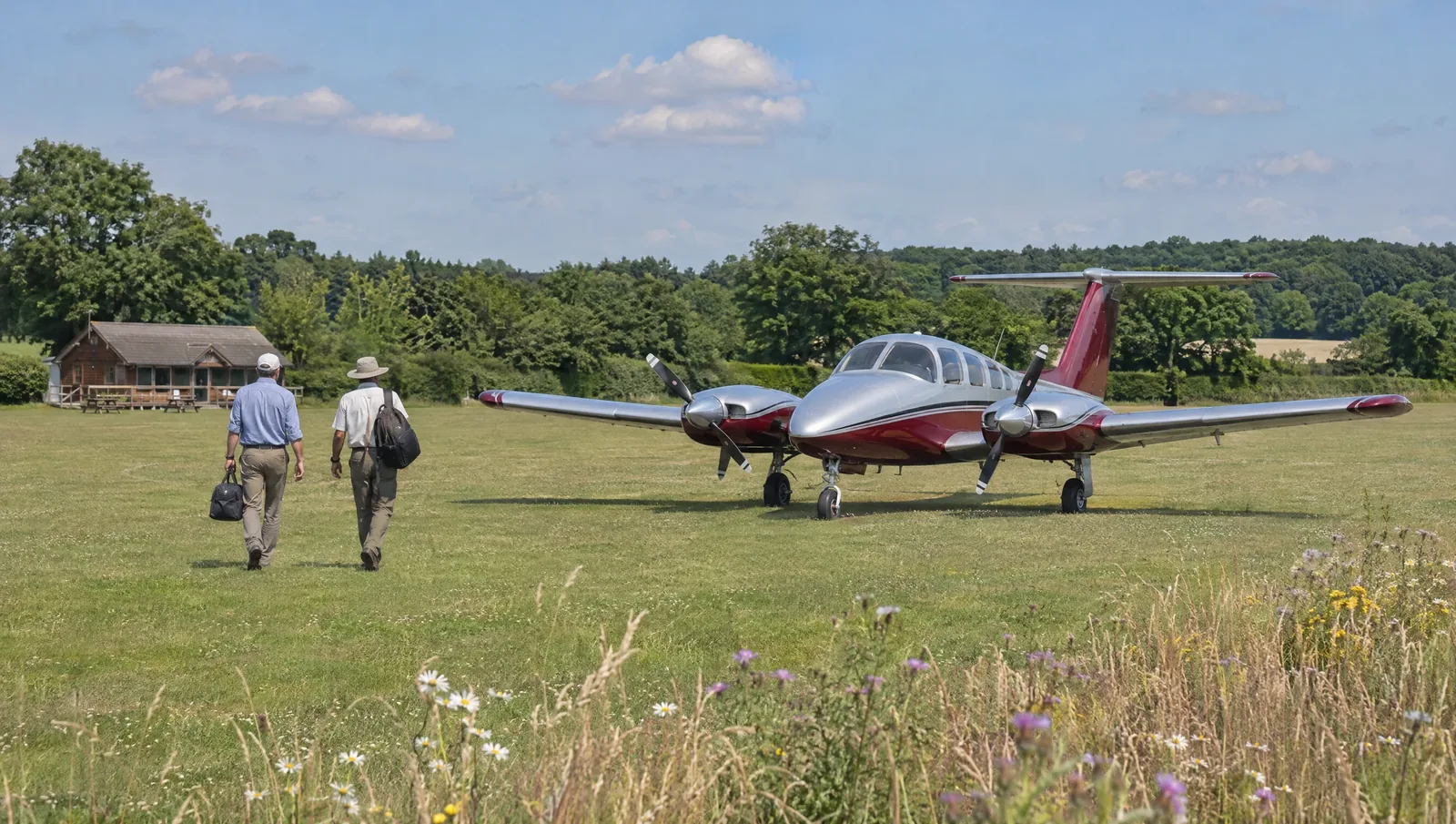
Walking out 04Part 4
Training and the rating
How engine failures are practised safely, the human factors, and the multi-engine piston class rating.
- 13Training, Safety and the RatingPractising engine failures safely, stall and spin in a twin, the VMC roll, the human factors, instrument flying on one engine, and the MEP class rating: the training course, theory exam, skill test, revalidation and renewal.20 slides Progress Test 13
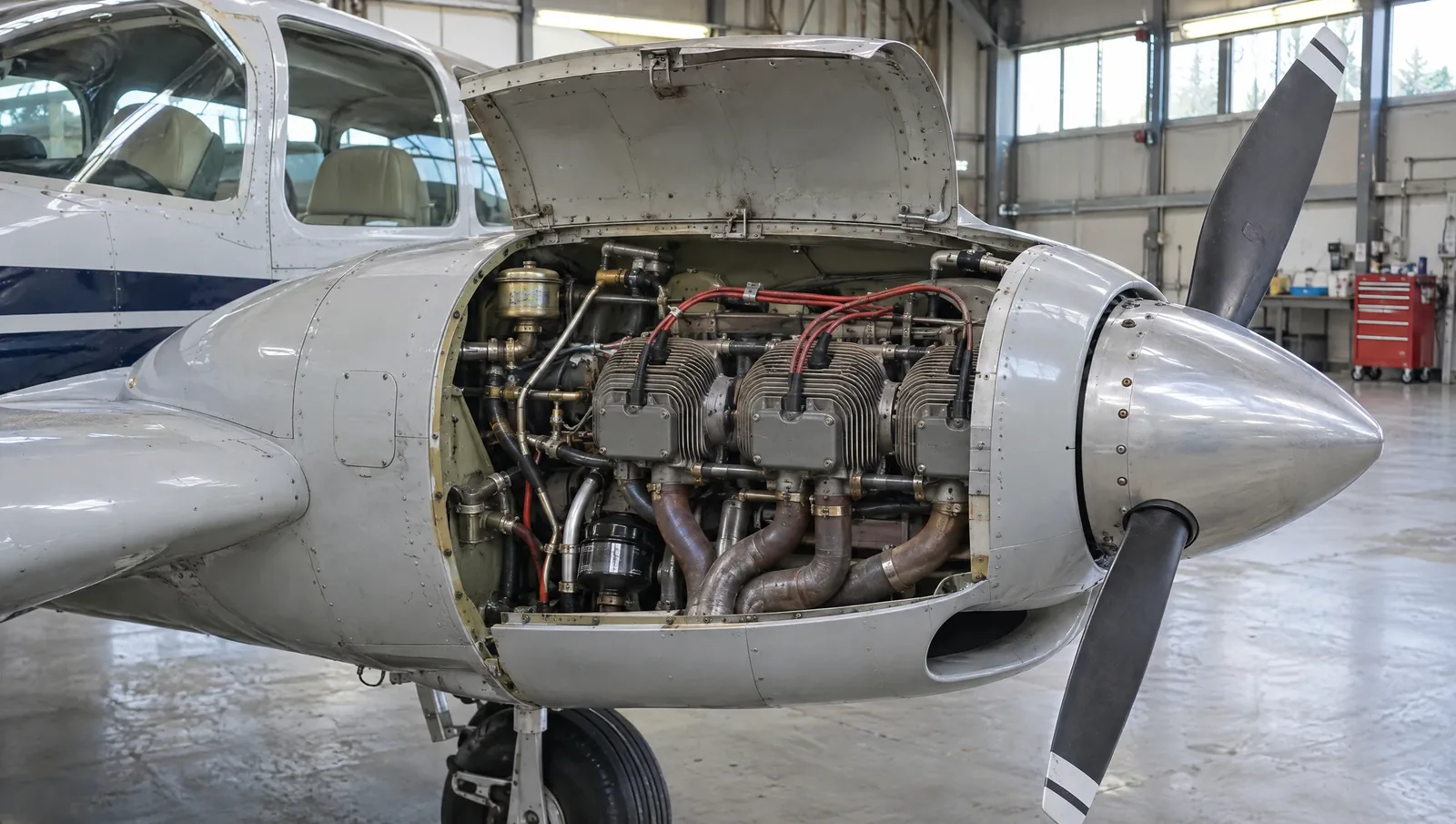
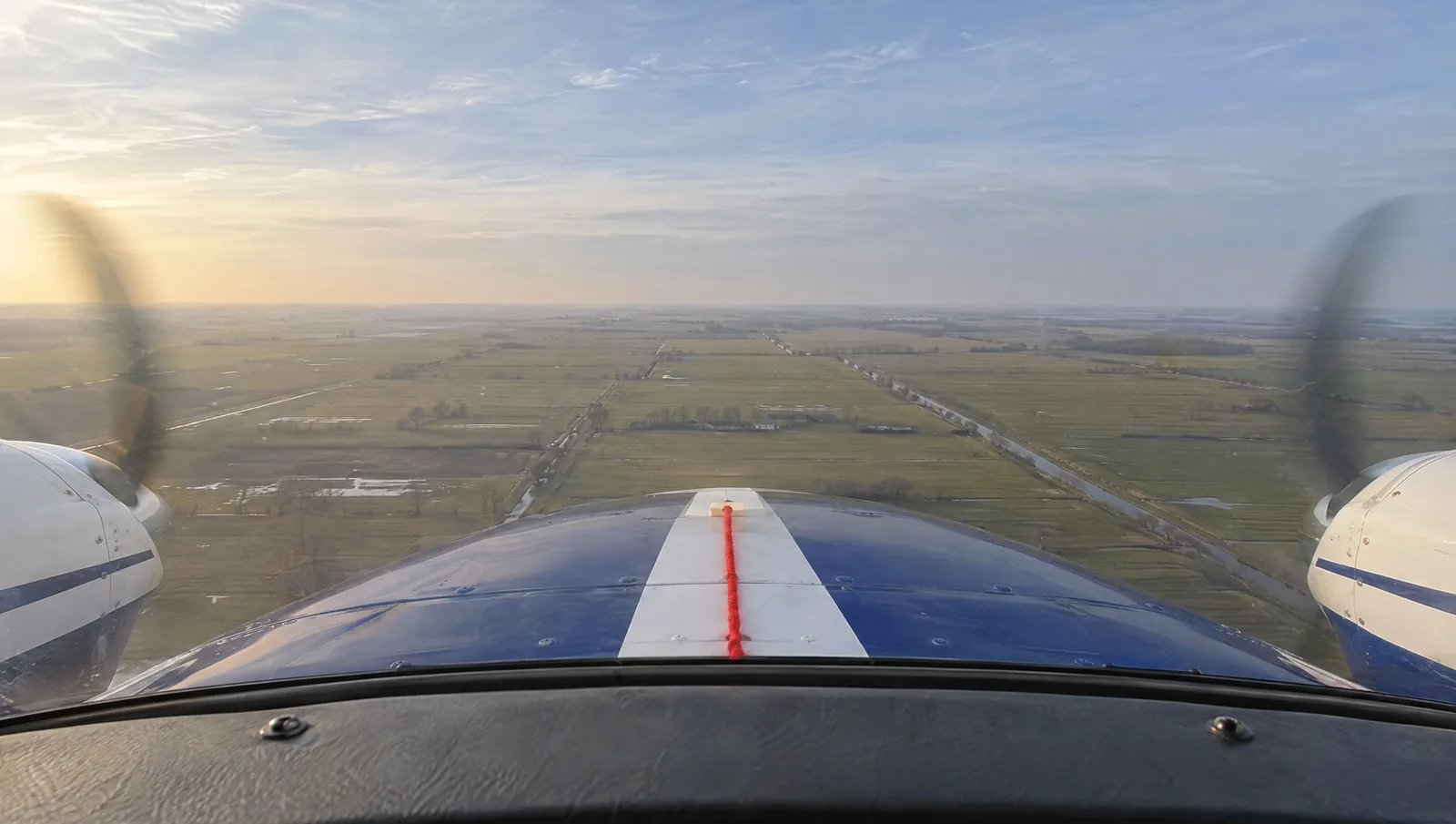
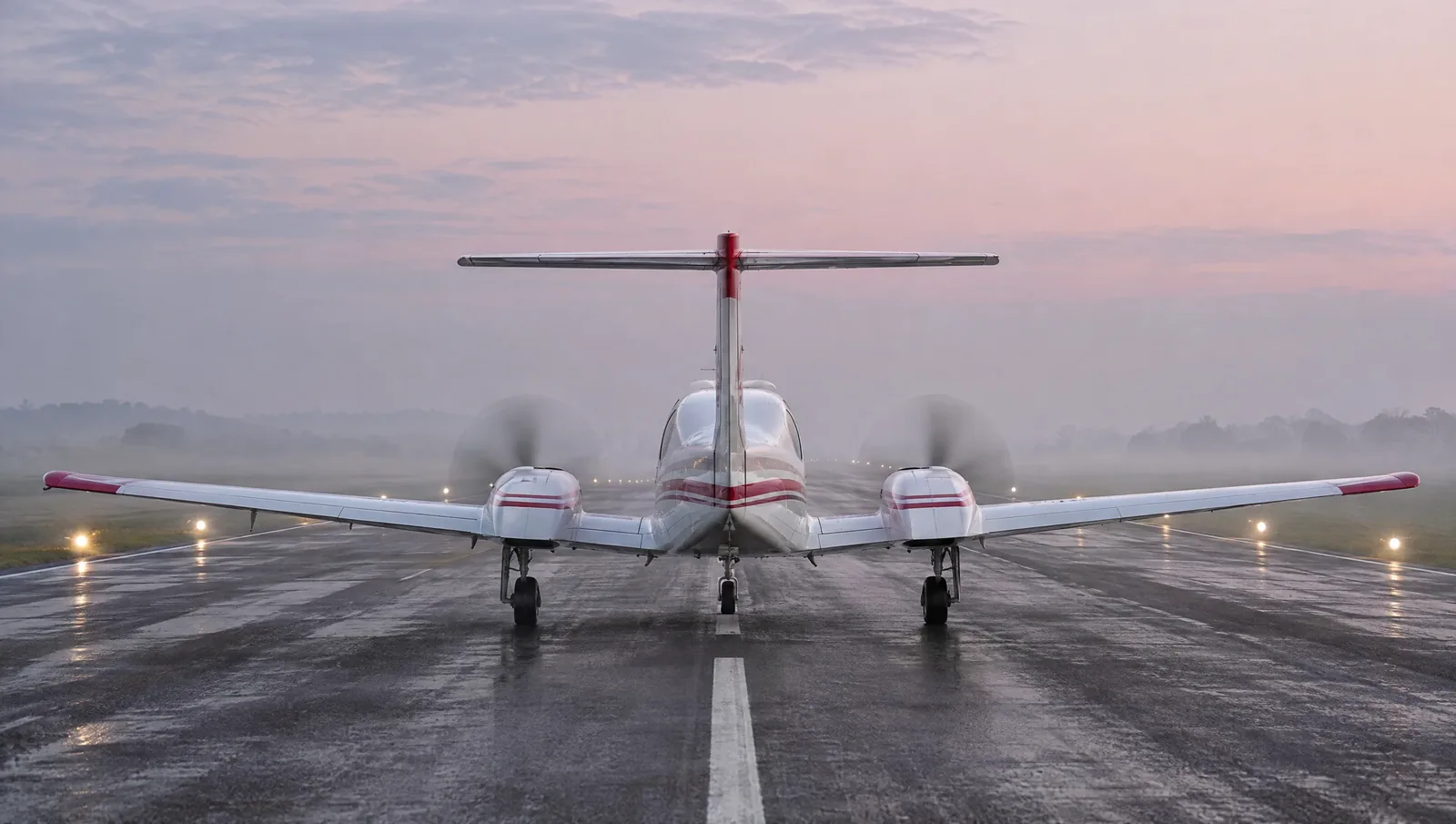
The route to the MEP class rating
- 1Understand it firstThis course, before or alongside your training.
- 2A course at an ATOOnce you have 70 hours as pilot in command in aeroplanes.
- 3Theory exam and skill testThen your MEP class rating, valid for one year.
Not one type
Many twins, every one different
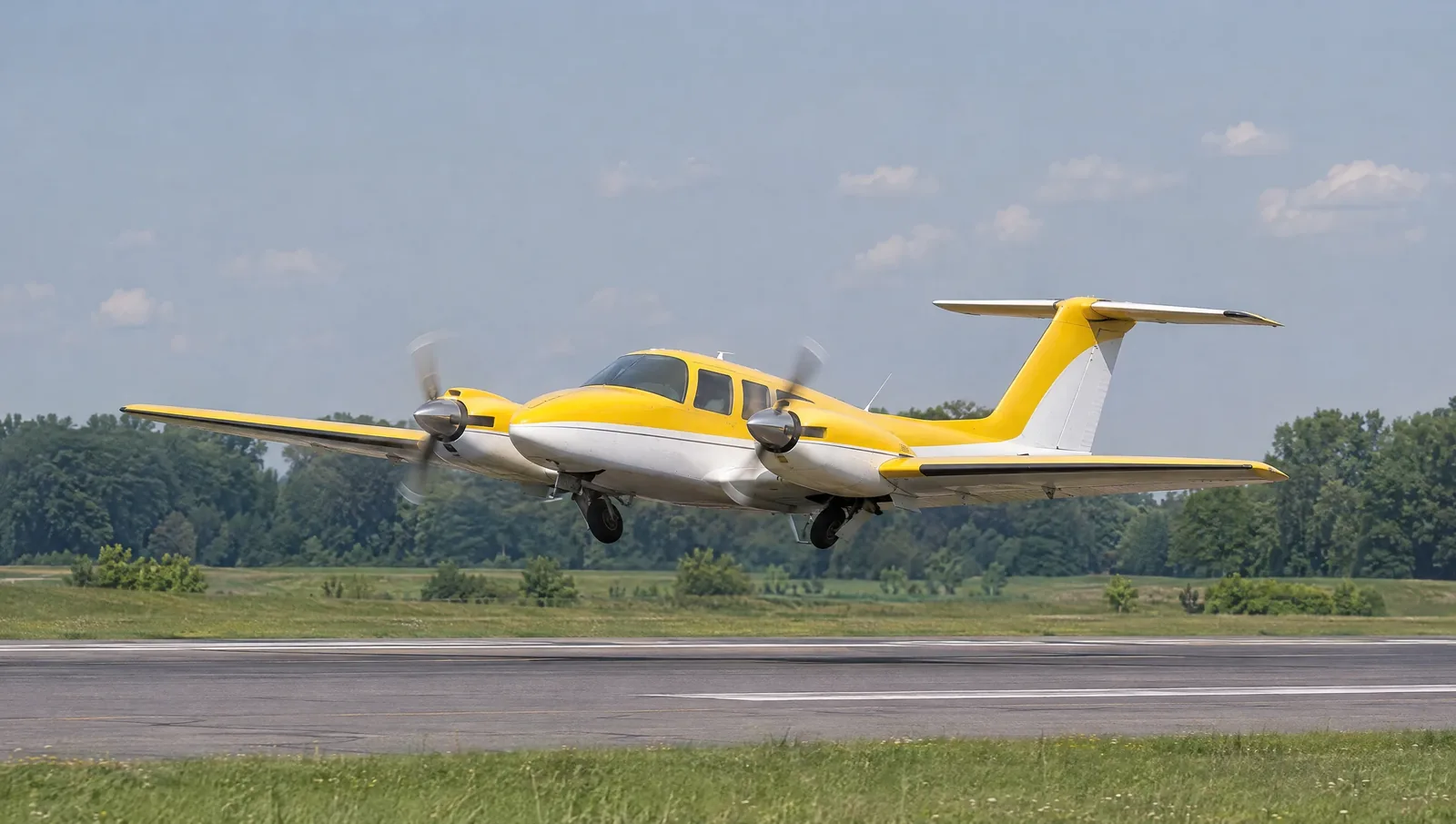
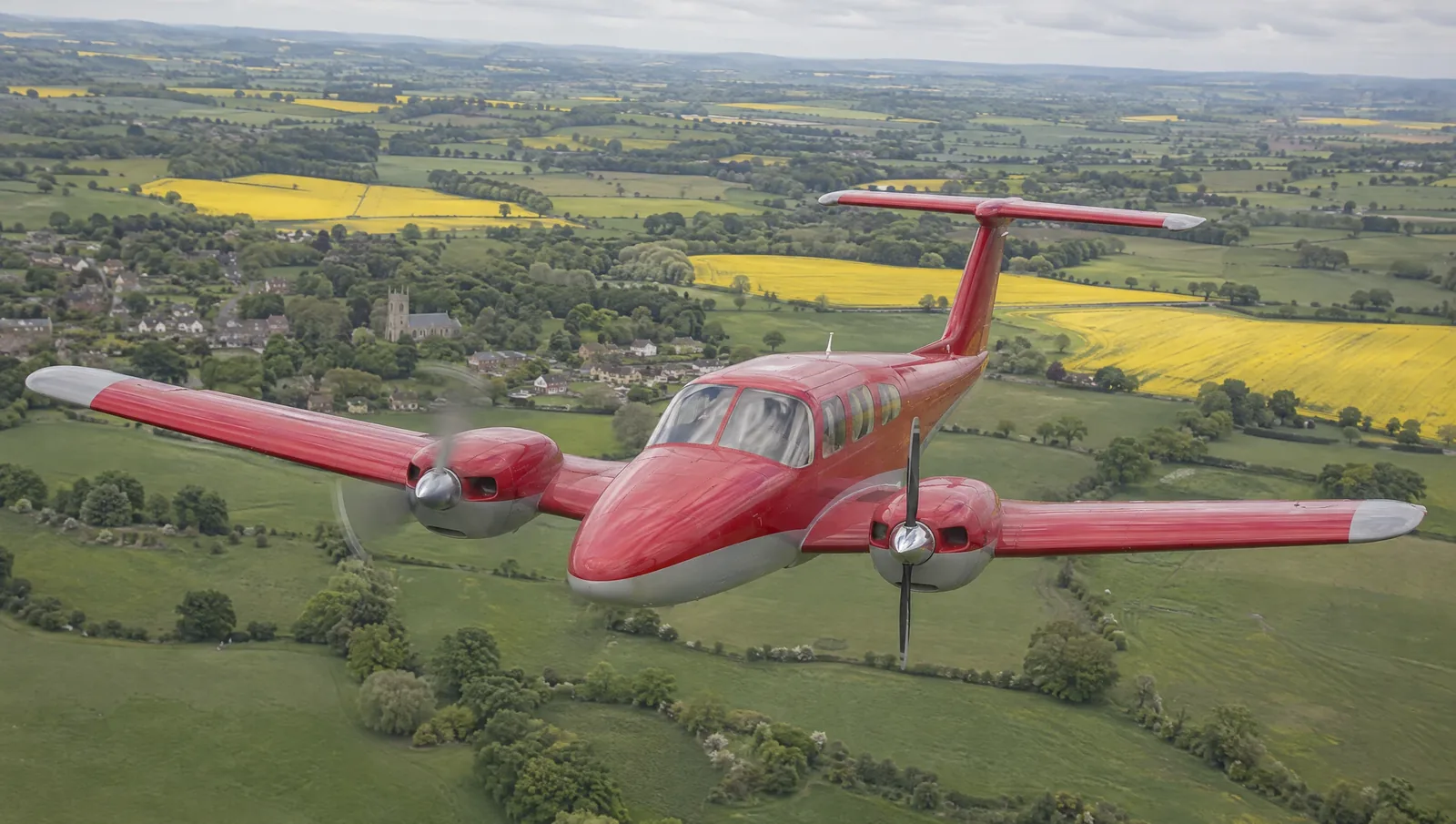
The course's pictures show many different light twins. Real types, such as the Piper Seneca, Beechcraft Duchess or Diamond DA42, are named only as examples.
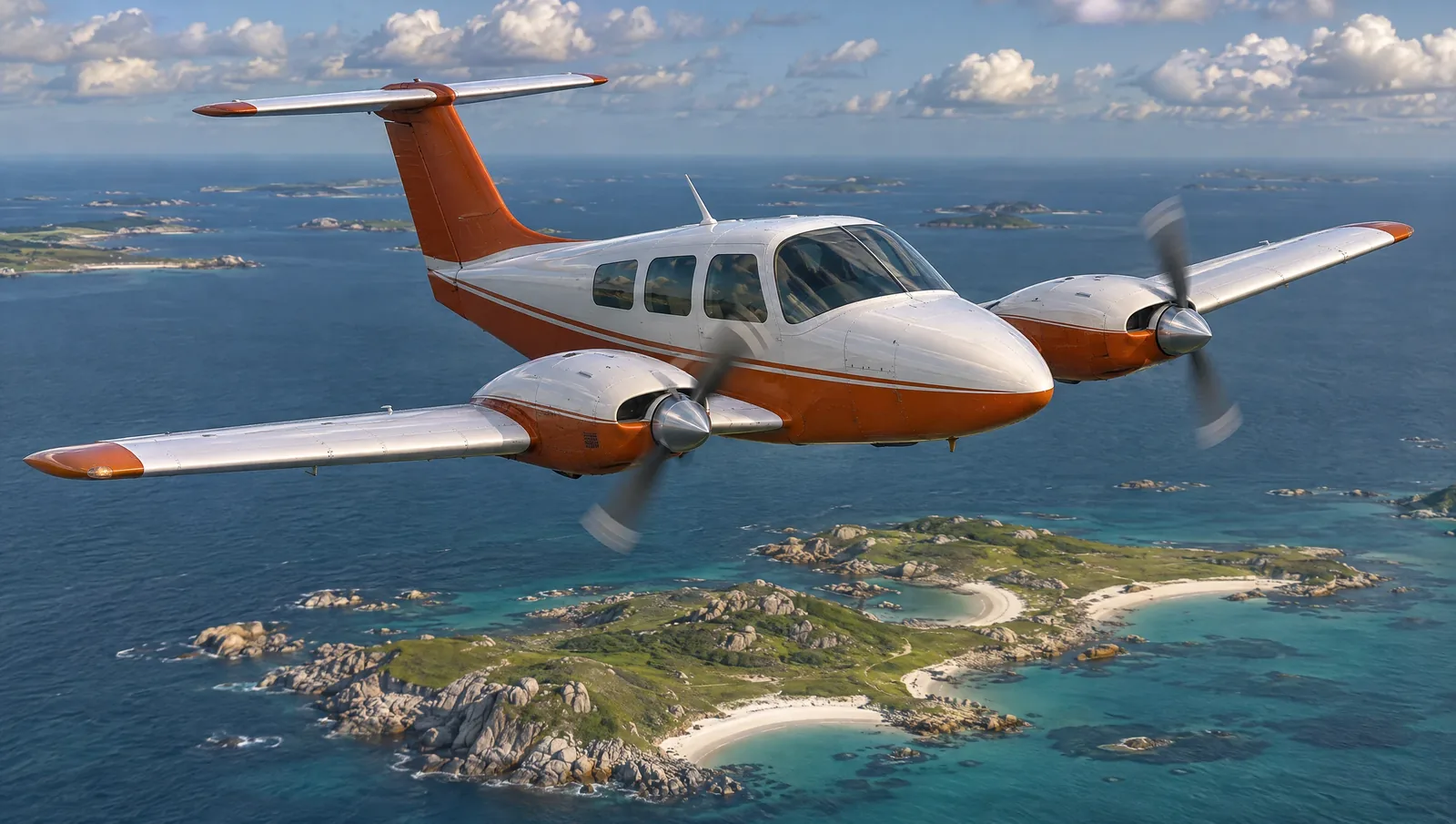
Over the islands 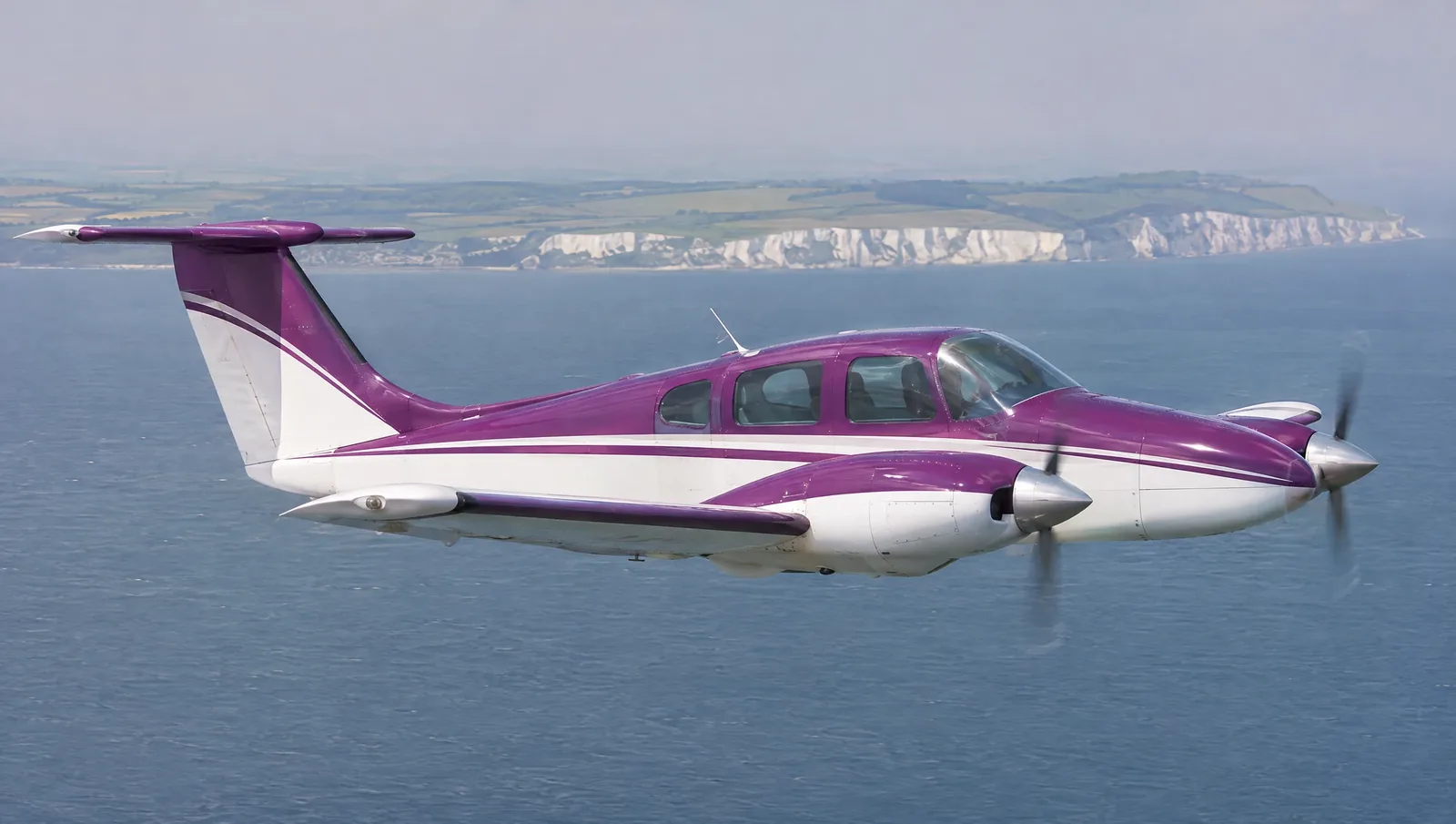
Chalk cliffs 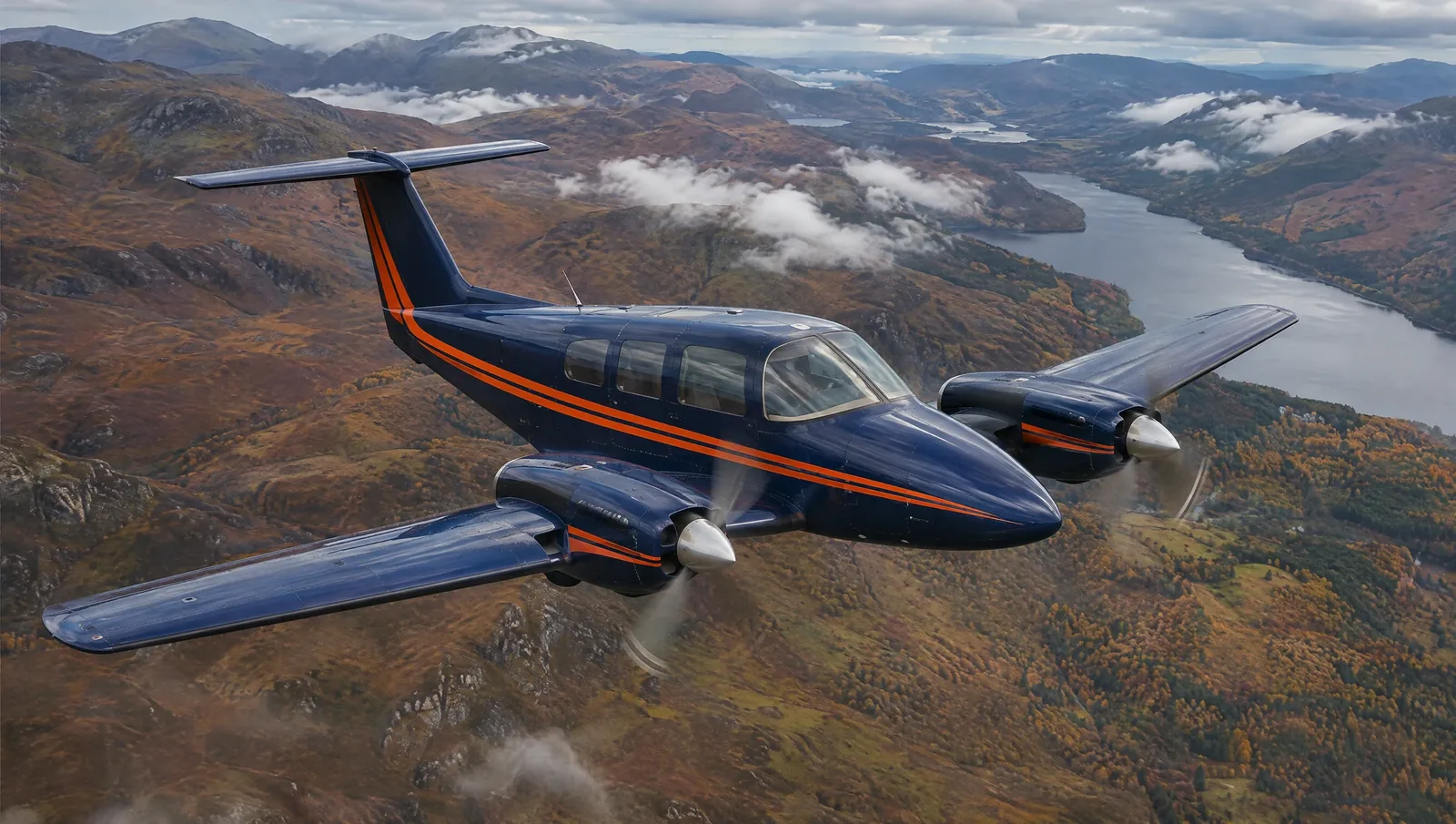
The Highlands 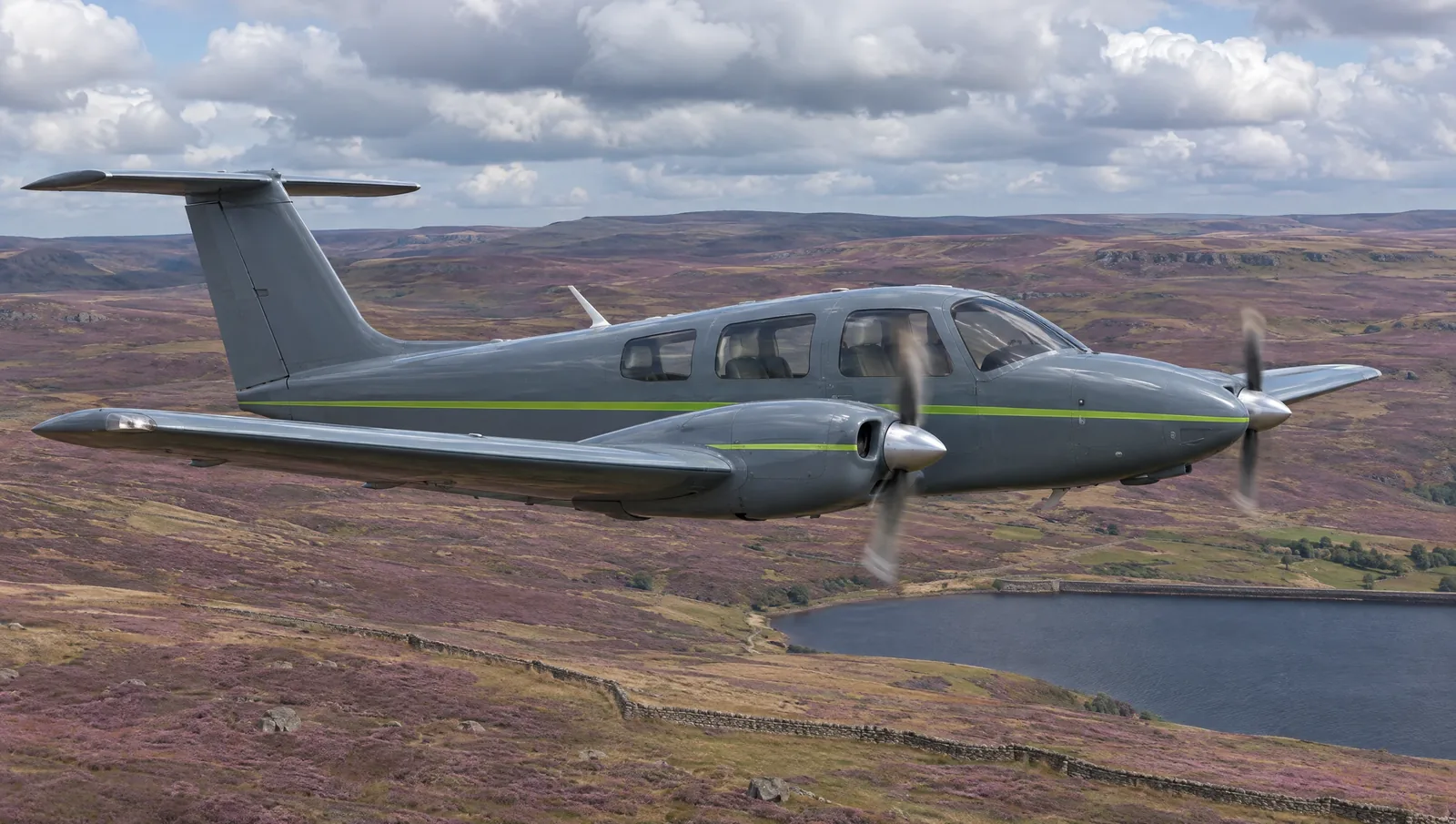
Heather moorland 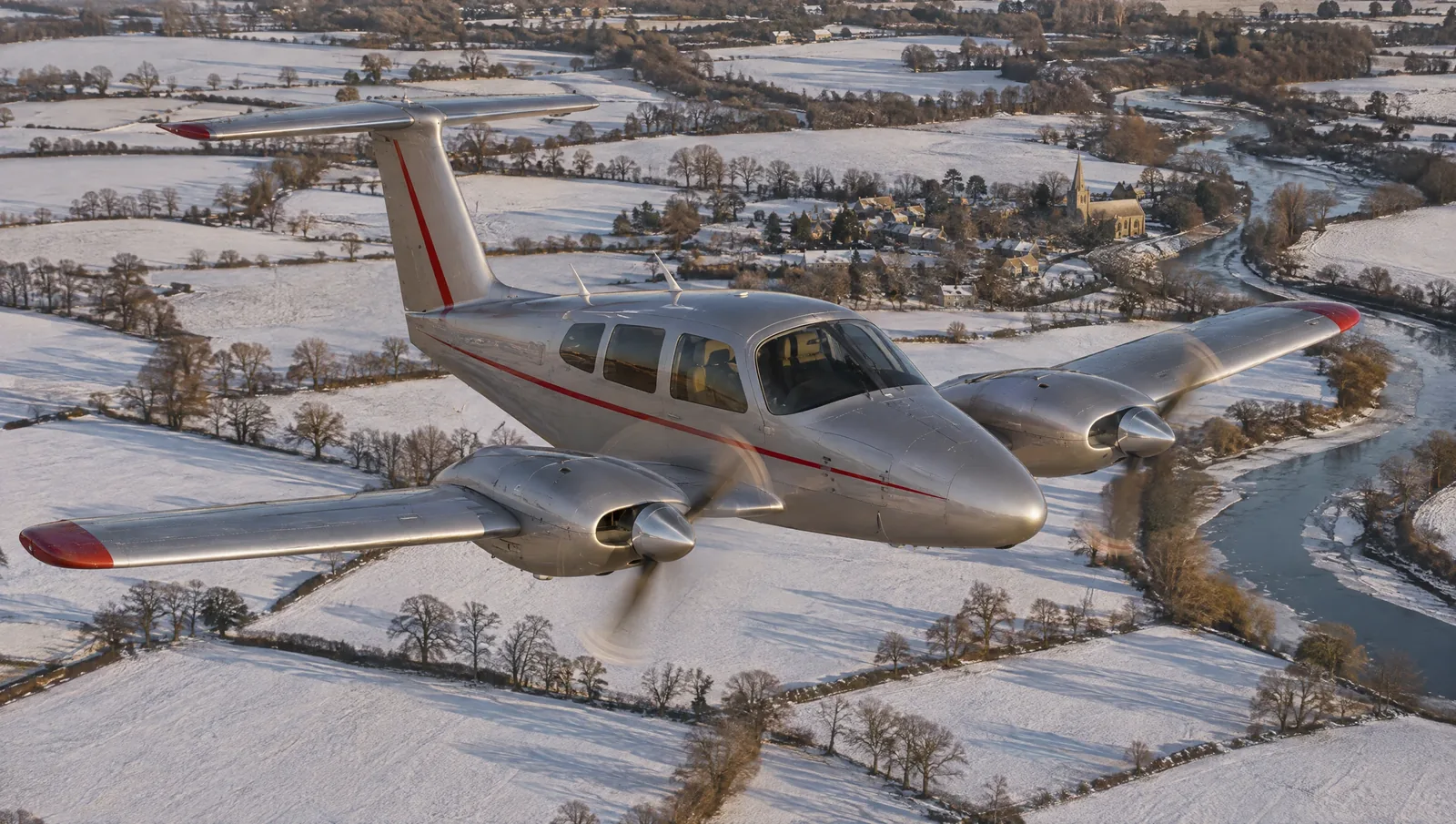
Snow on the fields 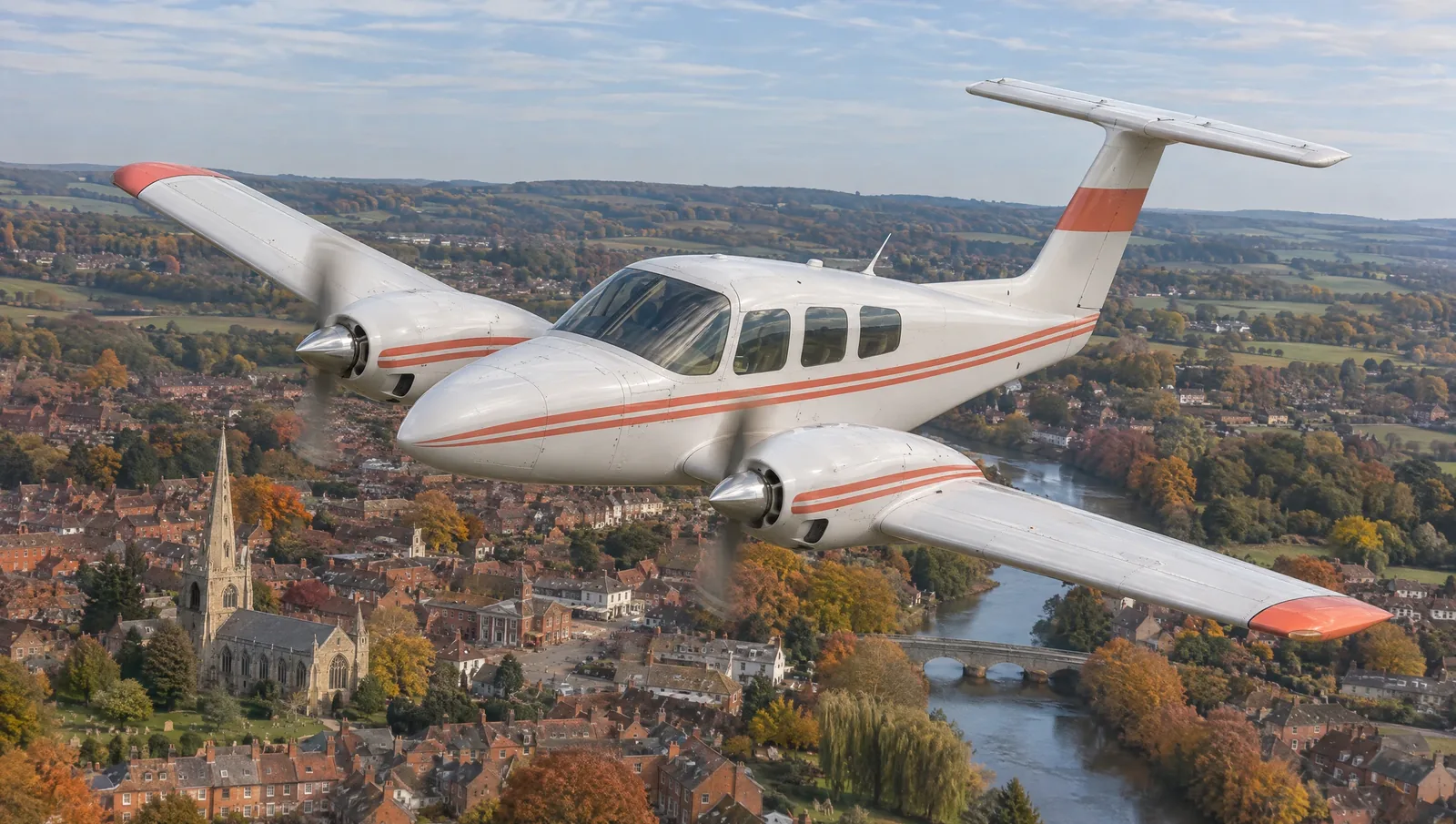
A market town 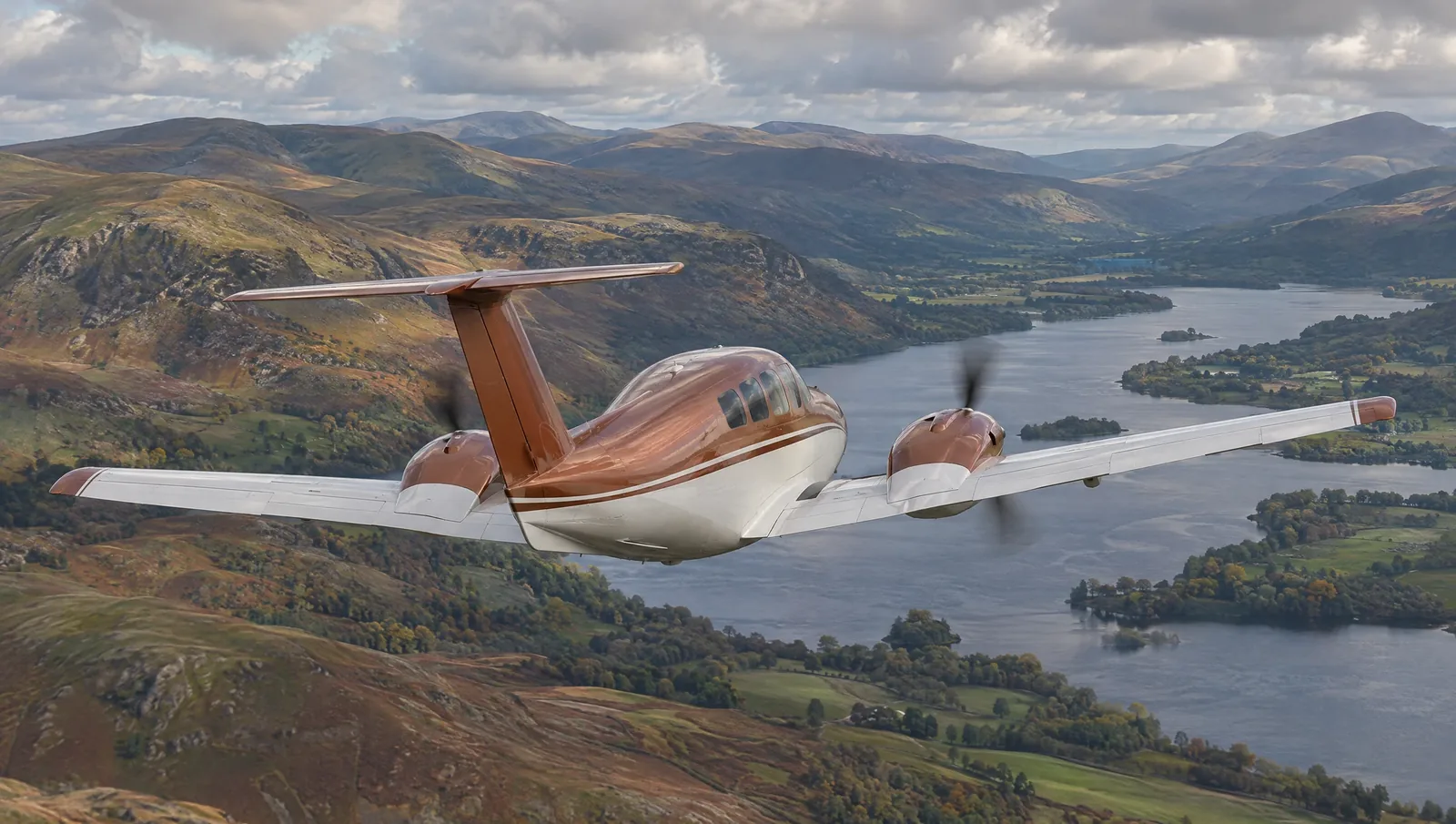
The Lakes 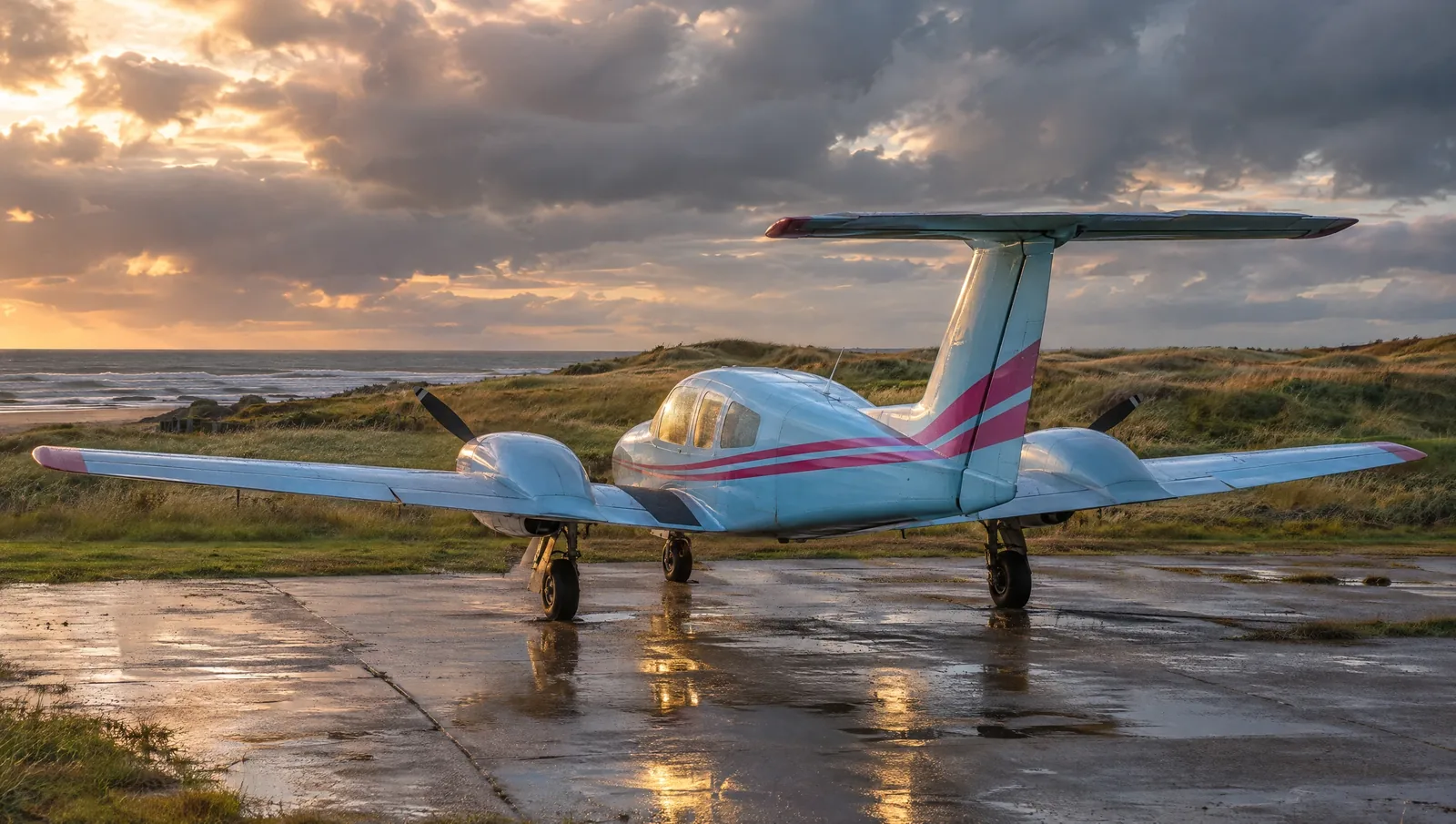
By the dunes 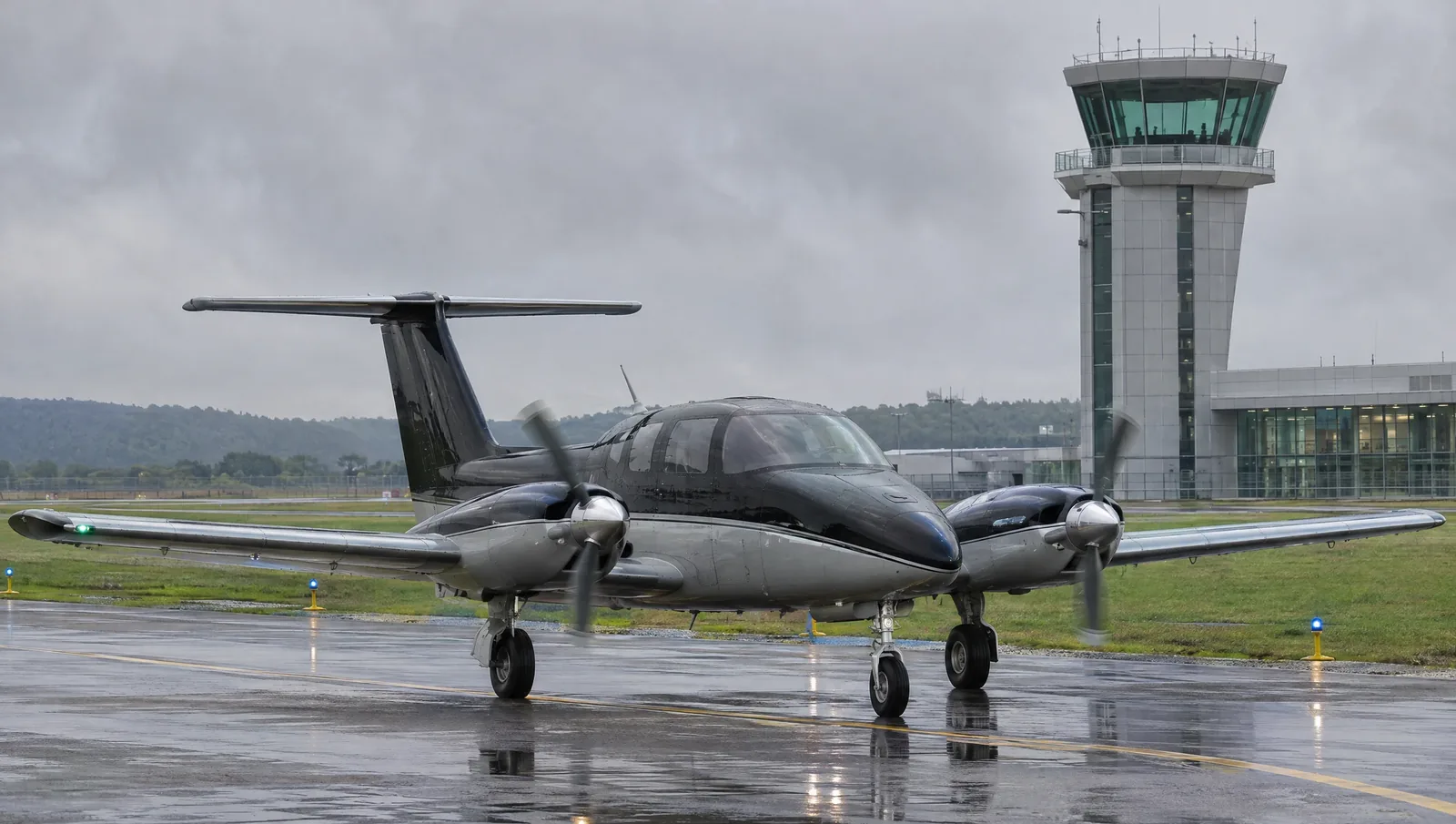
Rain at the tower 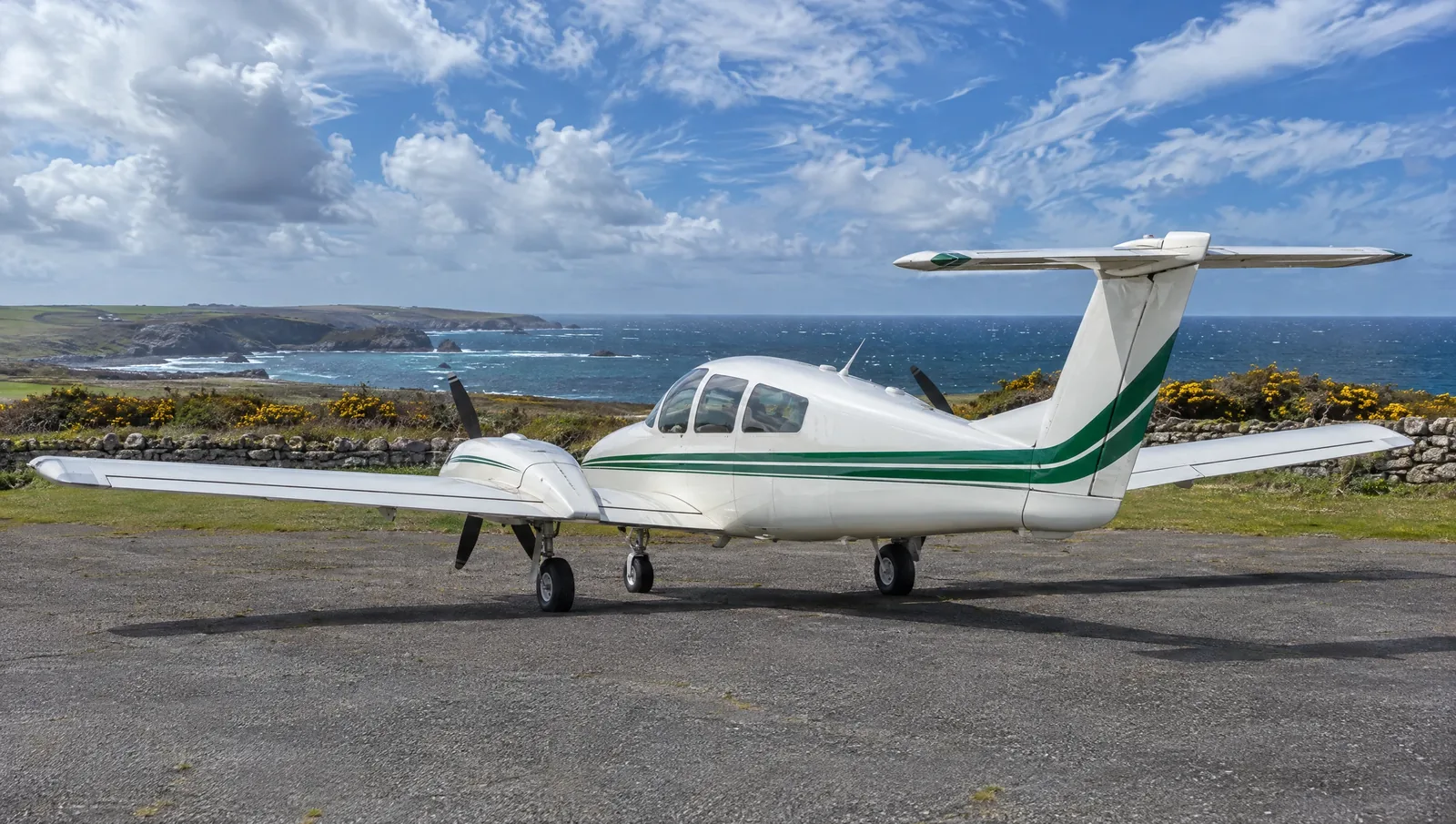
A clifftop airfield 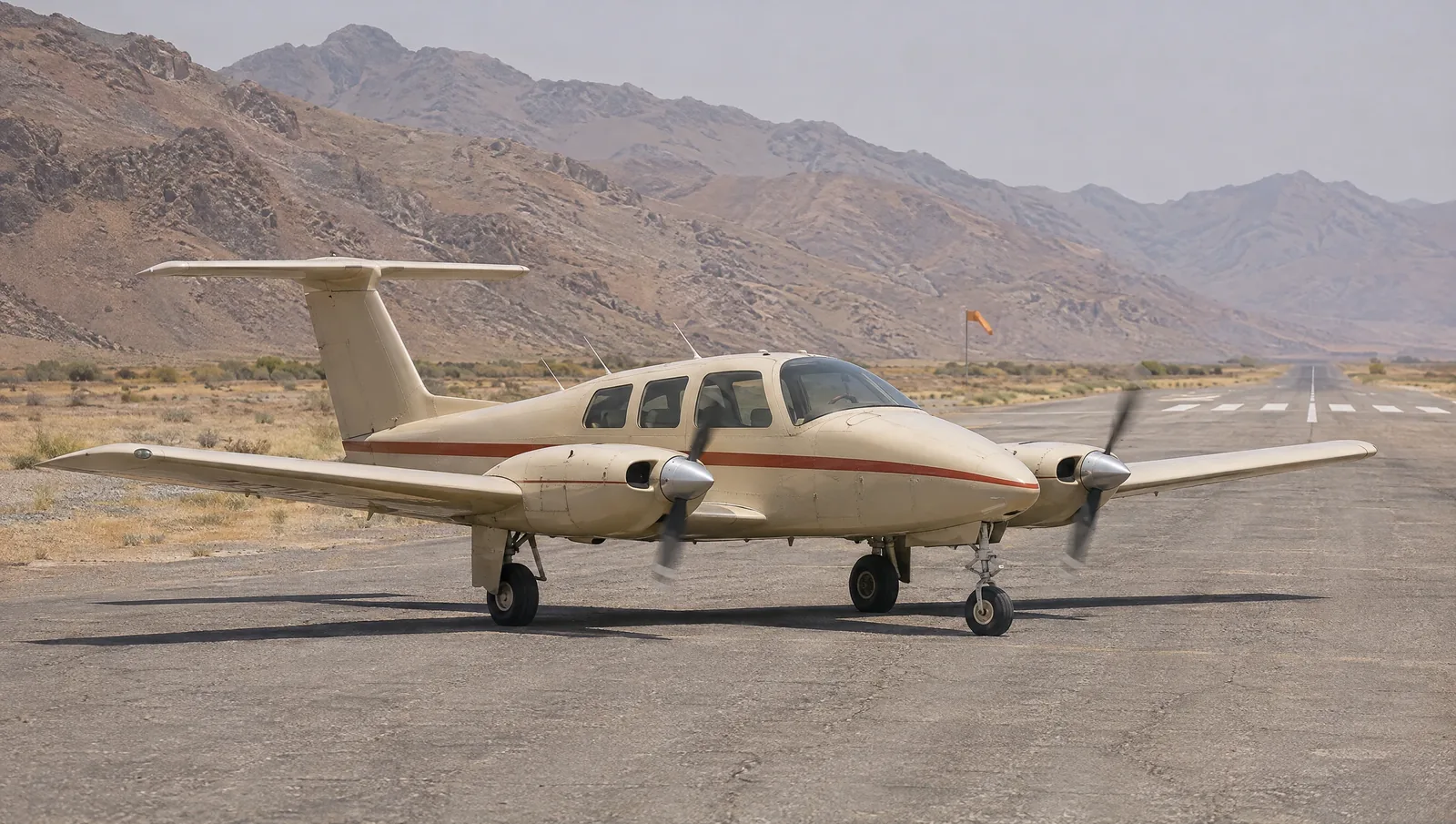
Hot and high 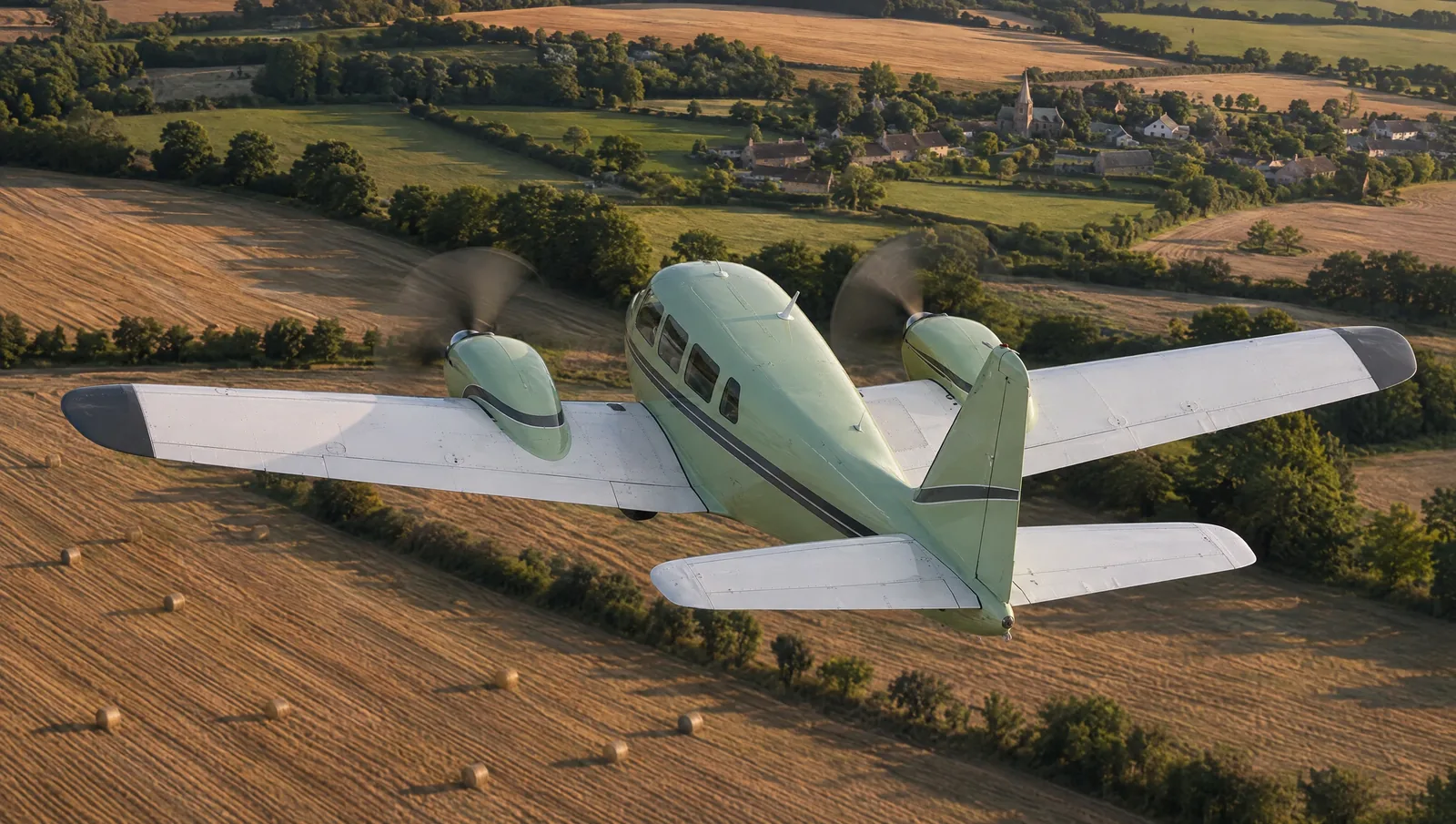
Harvest time 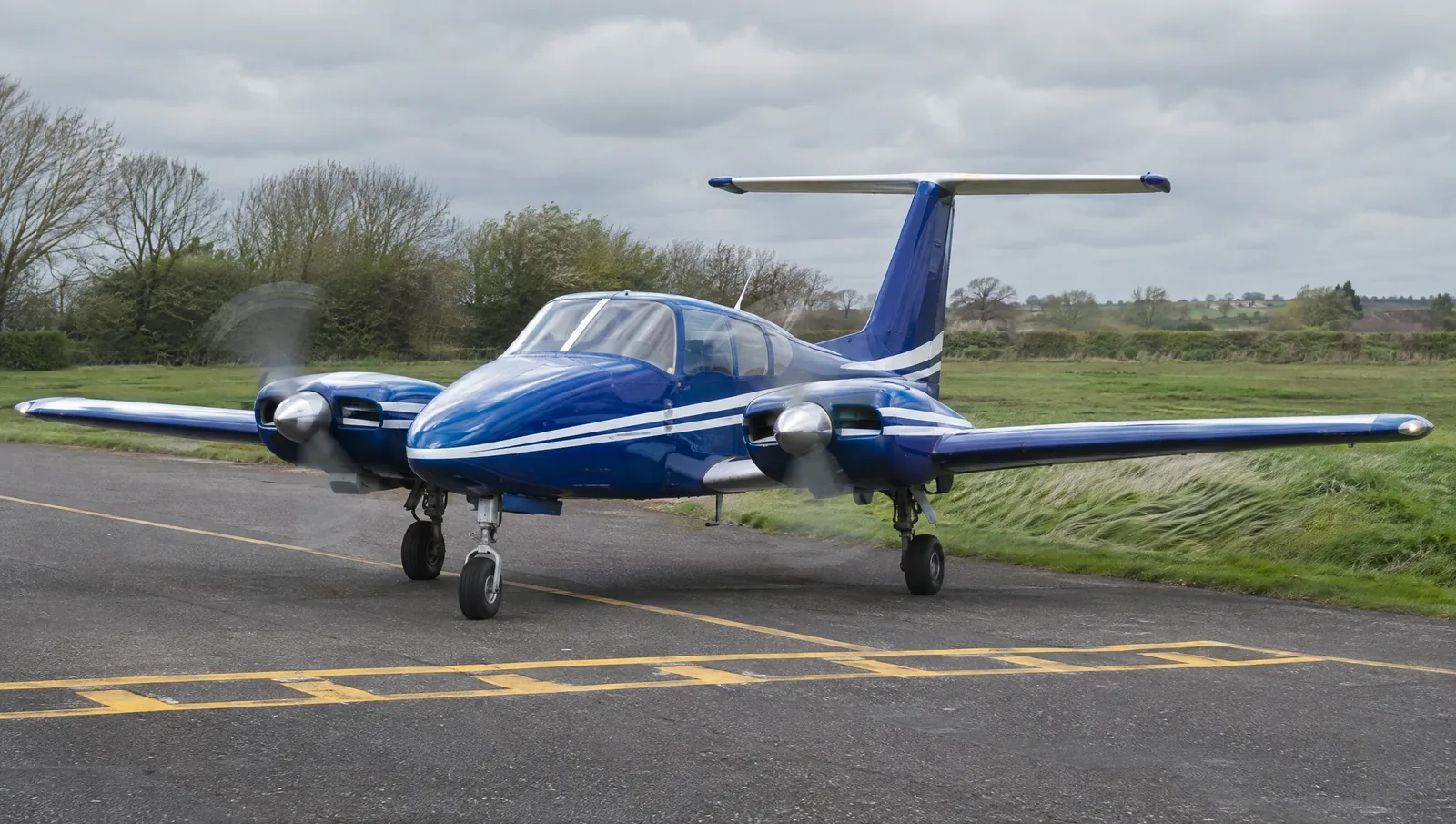
The holding point
Inside the course
The classic slides
Every animated slide also comes as a classic one: a still picture with its own narration. Switch between the two whenever you like.
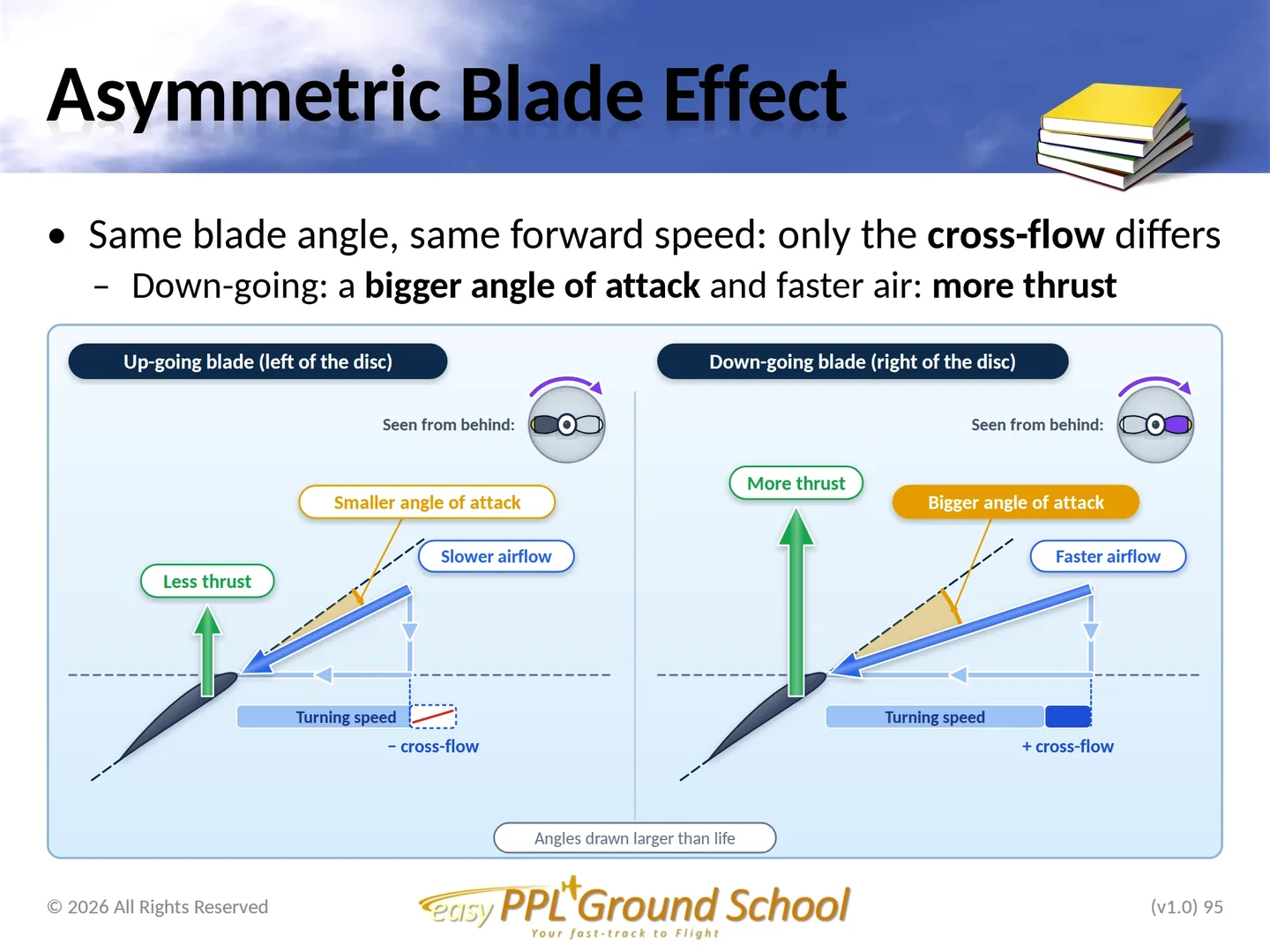
The down-going bladeChapter 6 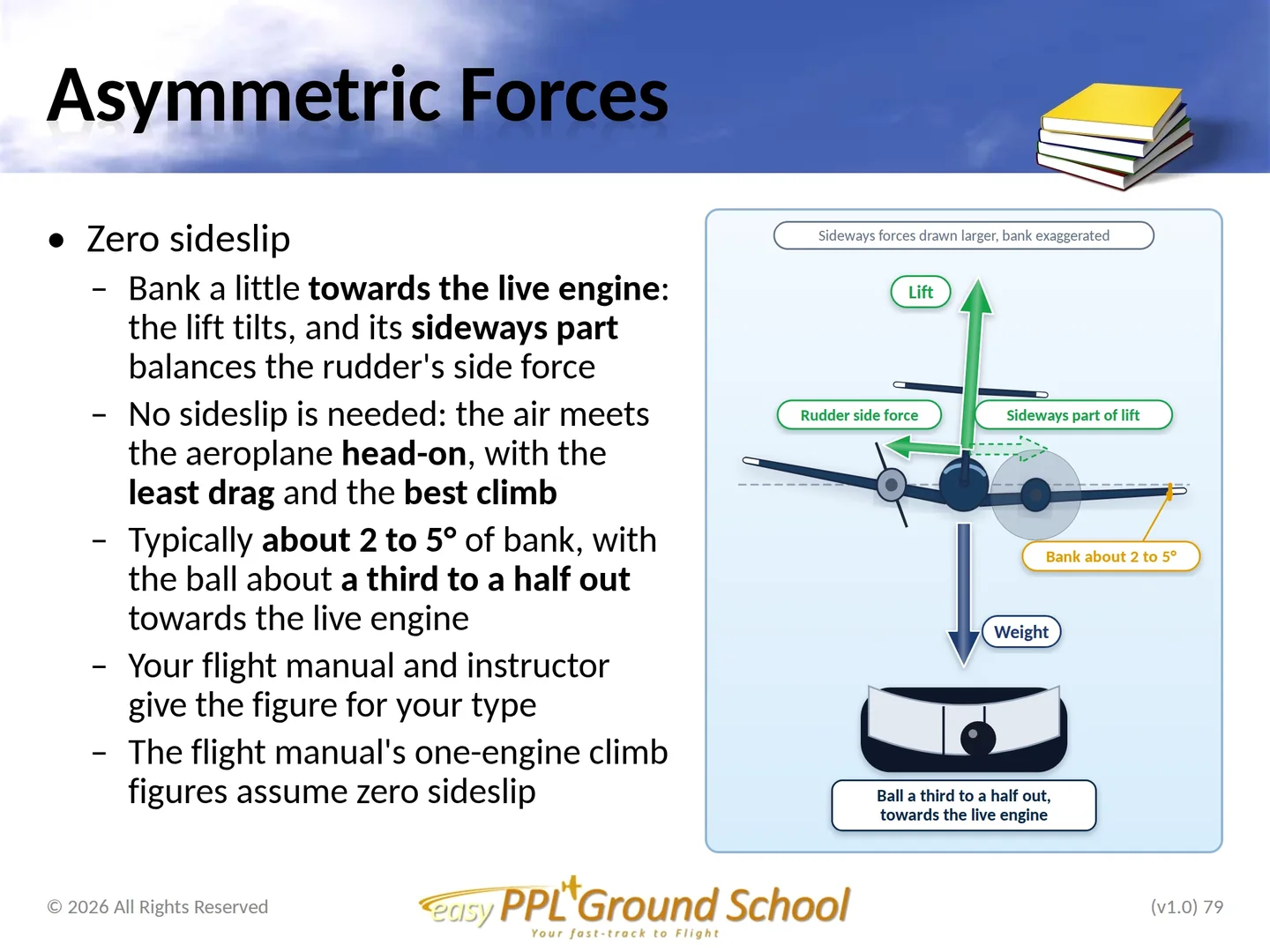
Zero sideslipChapter 5 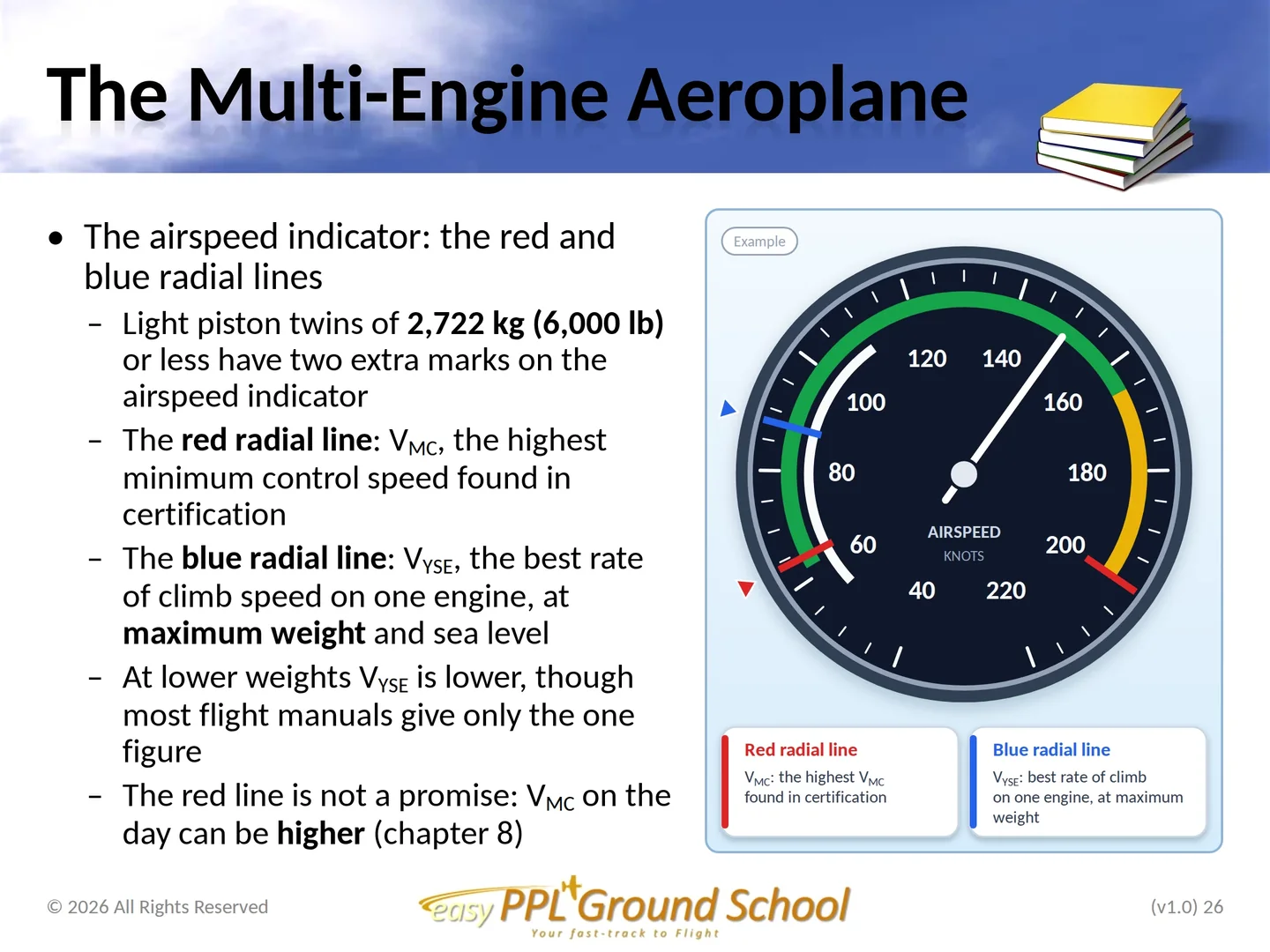
The red and blue linesChapter 2 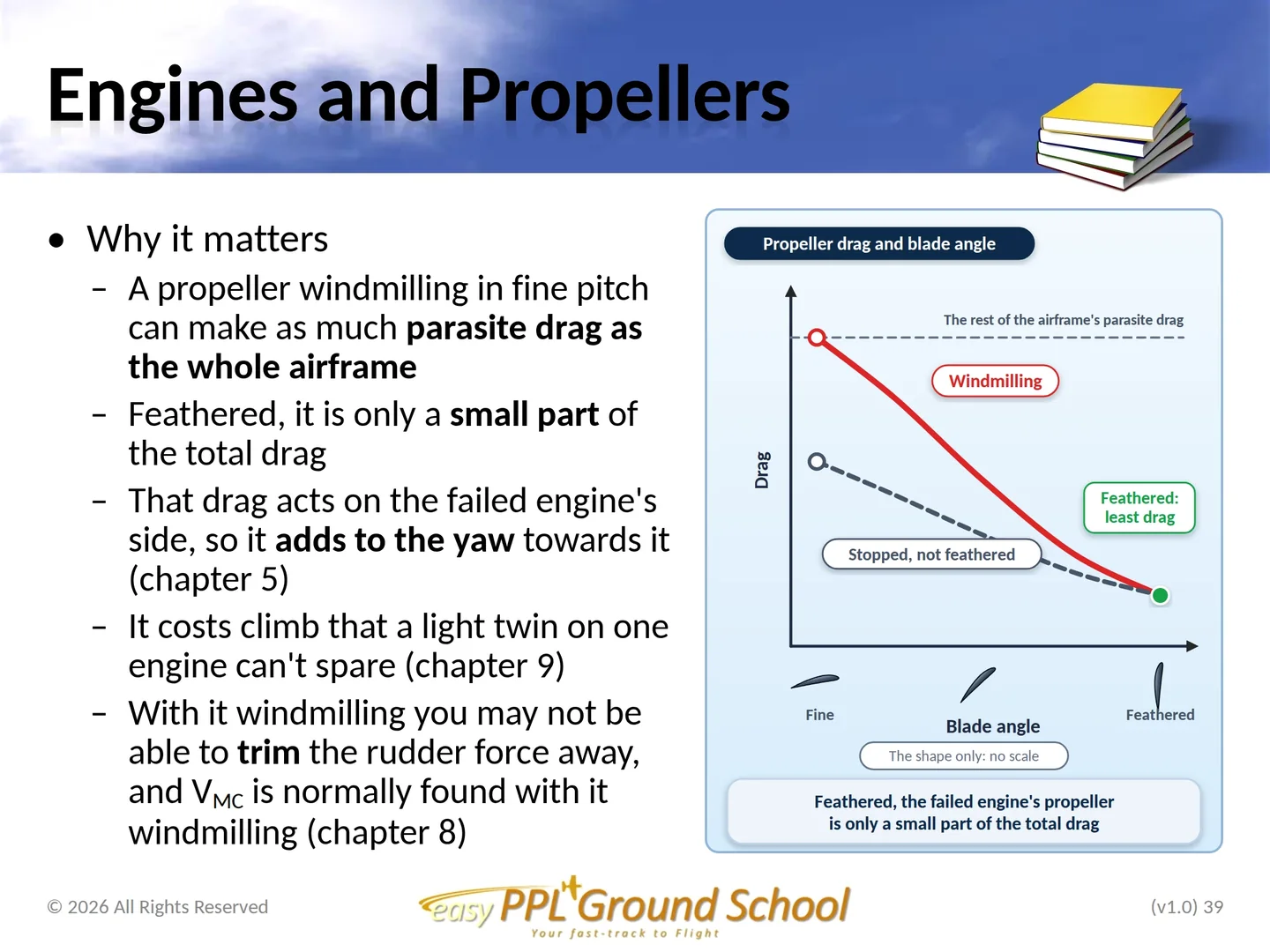
Why feathering mattersChapter 3 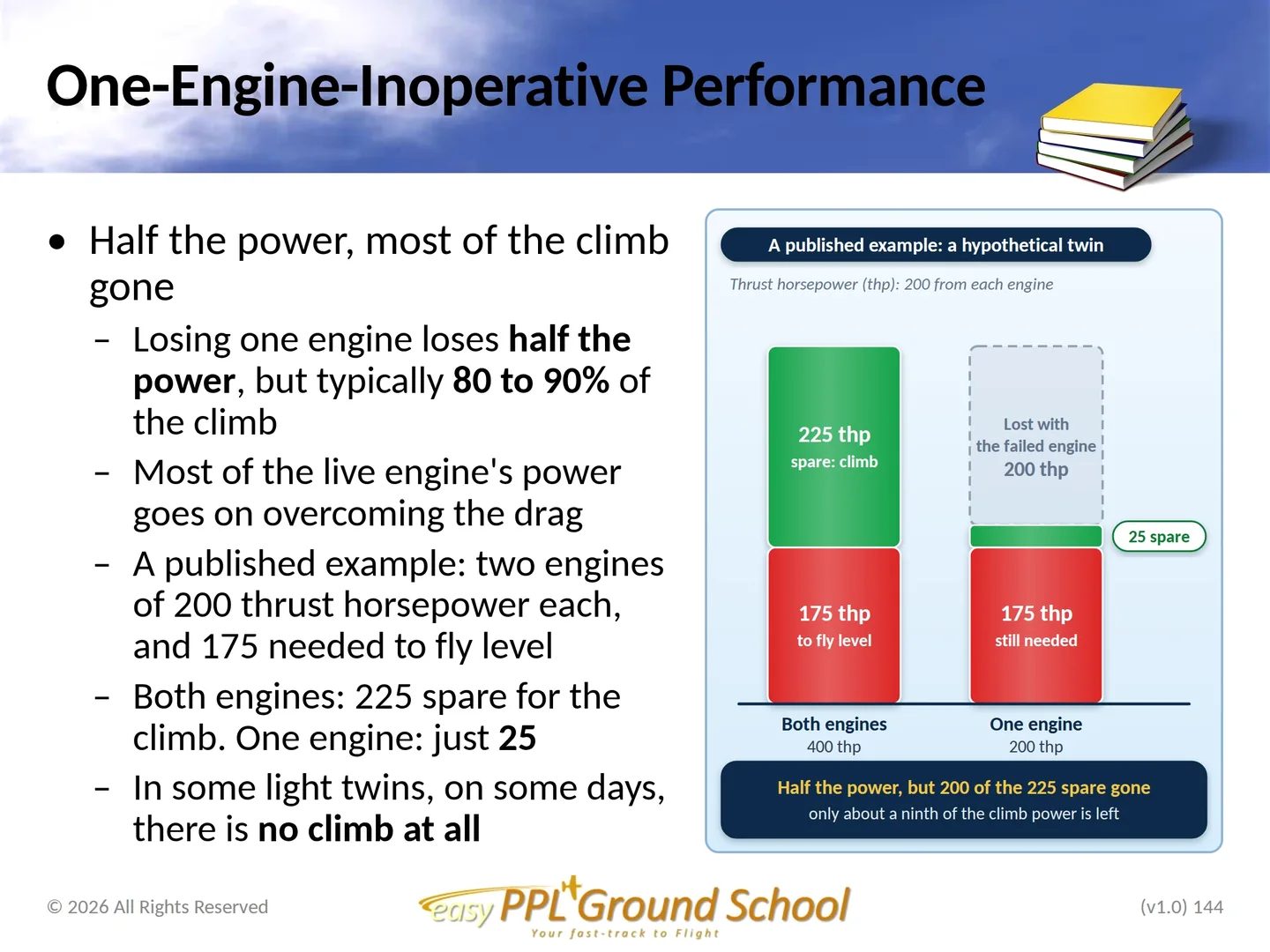
Half the power, most of the climbChapter 9 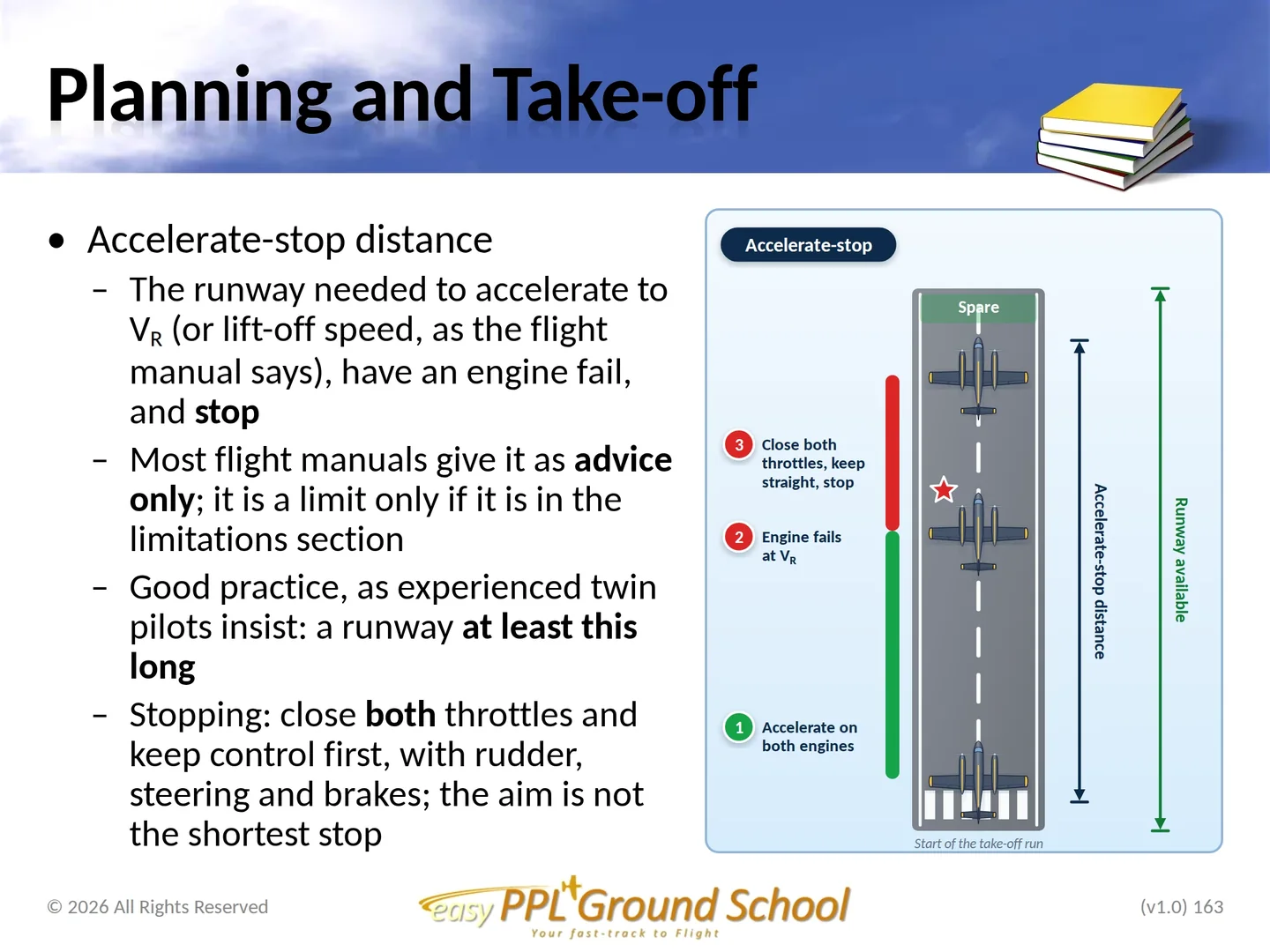
Accelerate-stop distanceChapter 10
What's included
Everything you need, in one place
- 237 animated slidesEach one built up step by step while three narrators teach it, in 13 chapters.
- Classic slides tooPrefer still pictures? Switch to Classic for any slide, with its own narration.
- 13 progress testsOne after every chapter, and every answer explained with a picture.
- Course exam30 questions on the whole course to finish.
- Certificate of completionYours when you pass the course exam.
- Kept up to dateUp-to-date material that stays up to date.
- Study anywhereOn your computer, tablet or phone.
Buy it now
Choose how you study
Full Course
£35.99£44.99for one month
Renew for £13.94 a month
- Every lesson in the course
- 13 progress tests
- The course exam
- 1 certificate
Test/Exam Access Only
£31.59£39.49for one month
Renew for £13.99 a month
- 13 progress tests
- The course exam
- Ideal for revision
No account needed to add to your basket: you'll register (free) at checkout, and your course opens as soon as you've paid.